

Locker Room Renovation
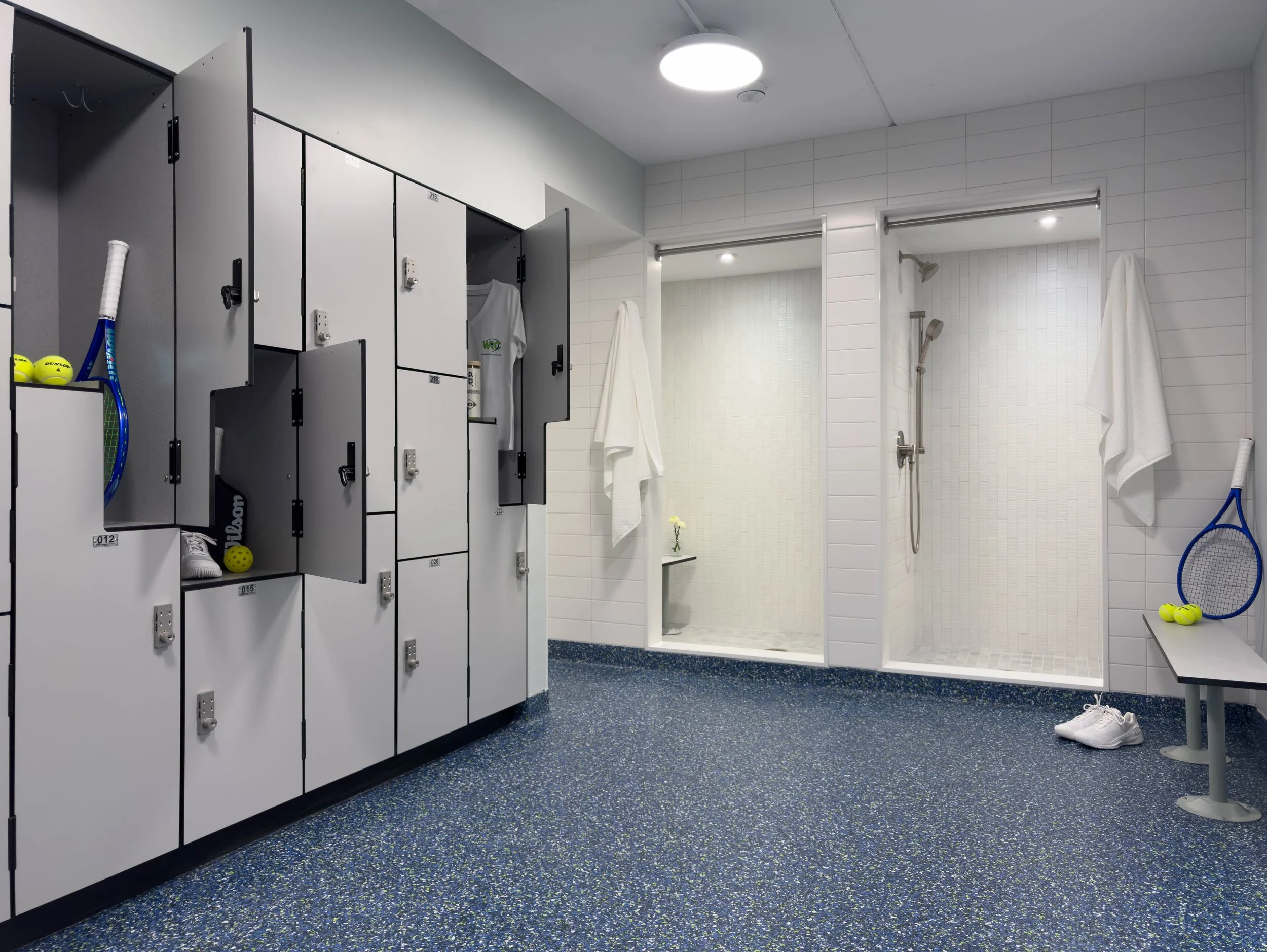
After decades of heavy use, Woburn Racquet Club’s locker rooms were due for a refresh. A complete reconfiguration of both the men’s and women’s spaces provide this club with function, efficiency and an aesthetic that highlights the WRC brand.
Where Did We Begin
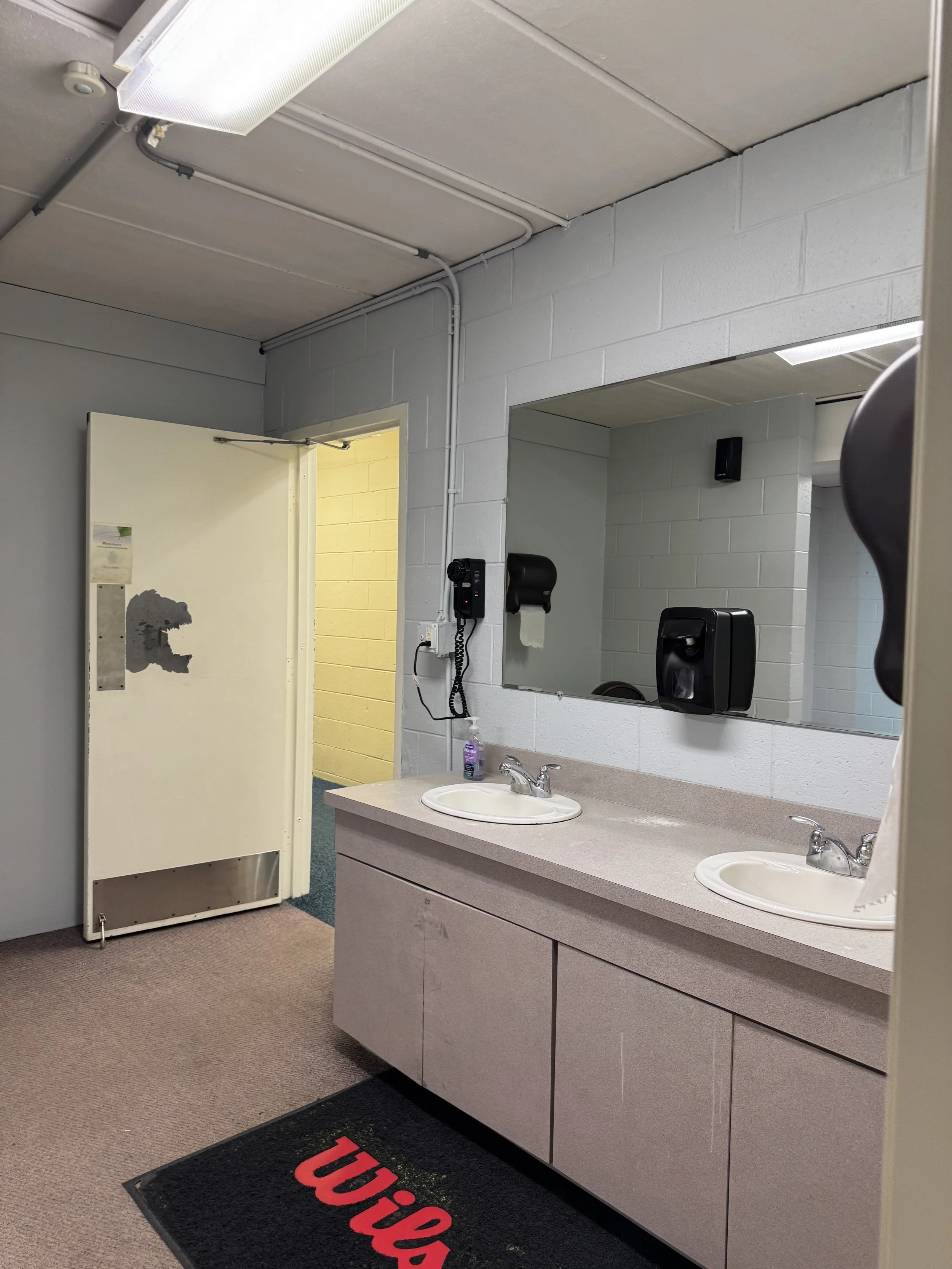
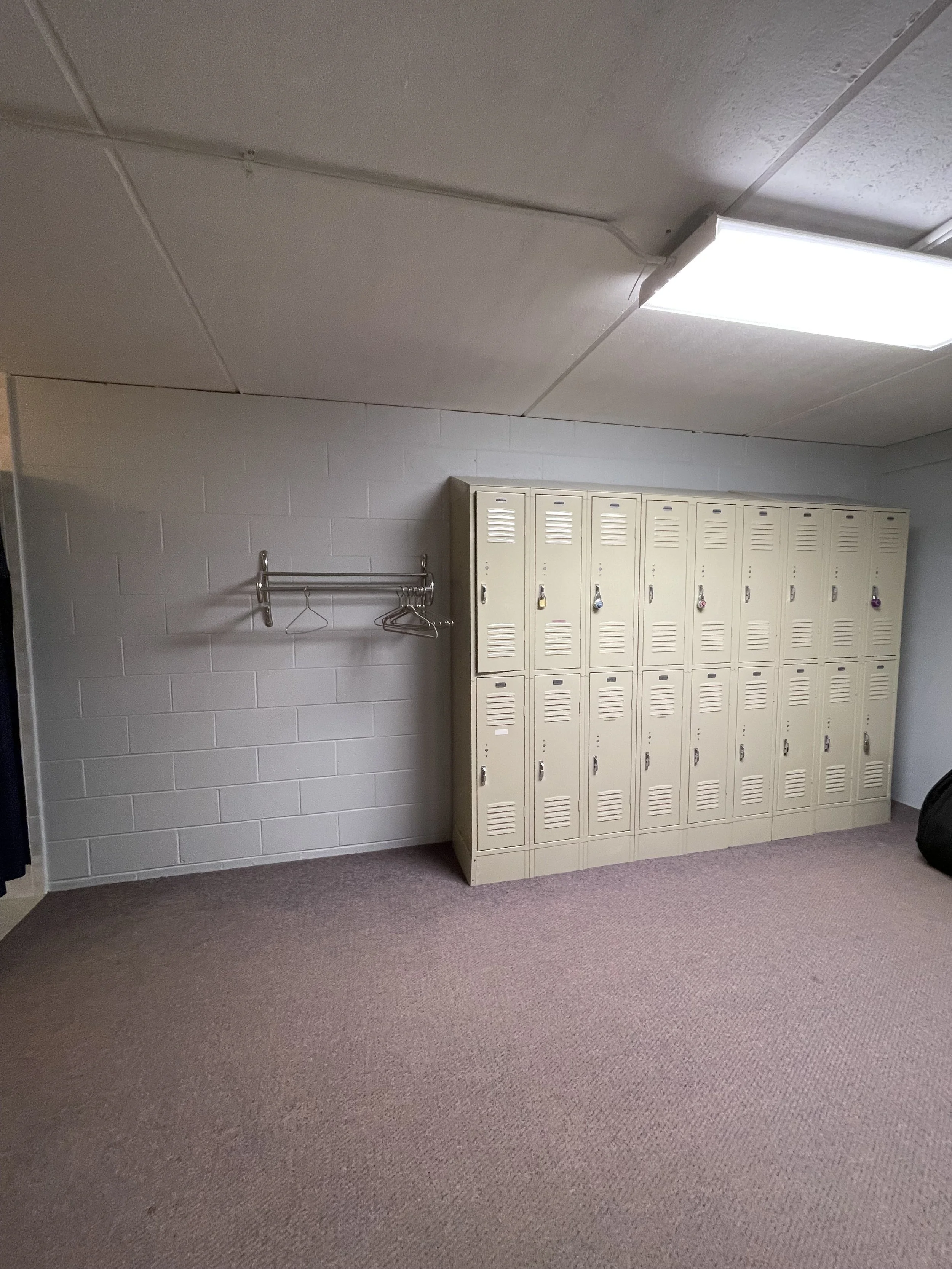
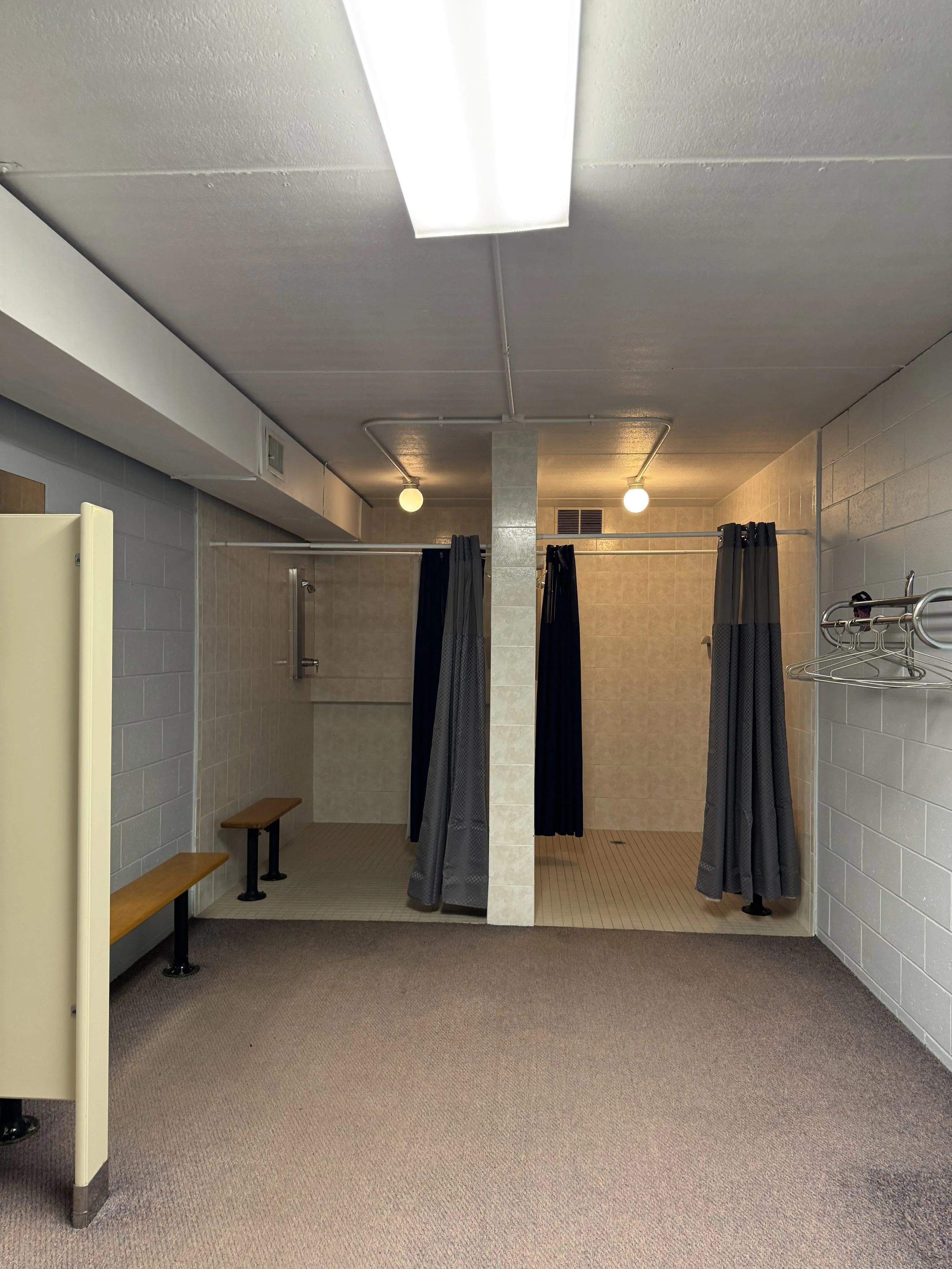
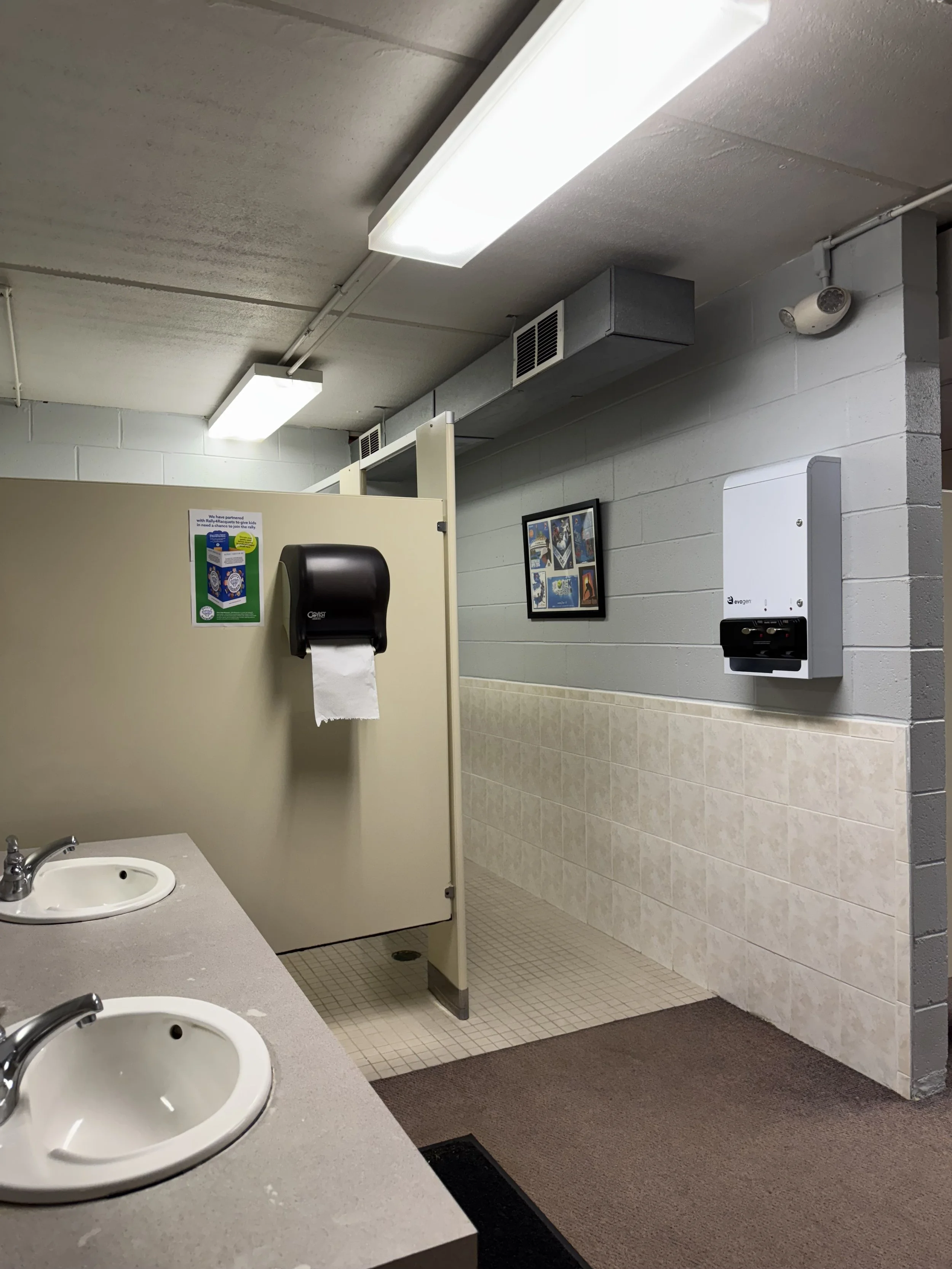
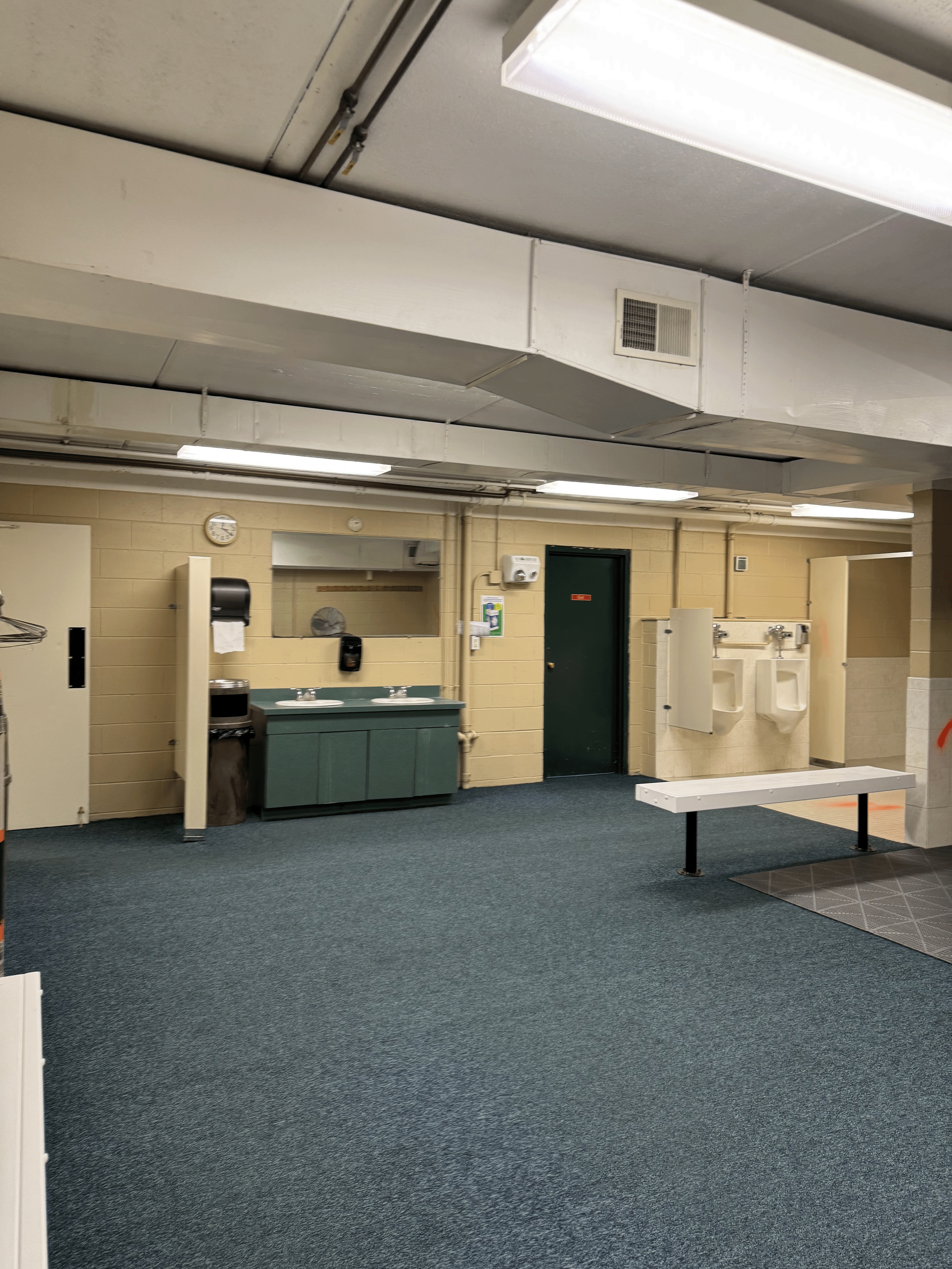
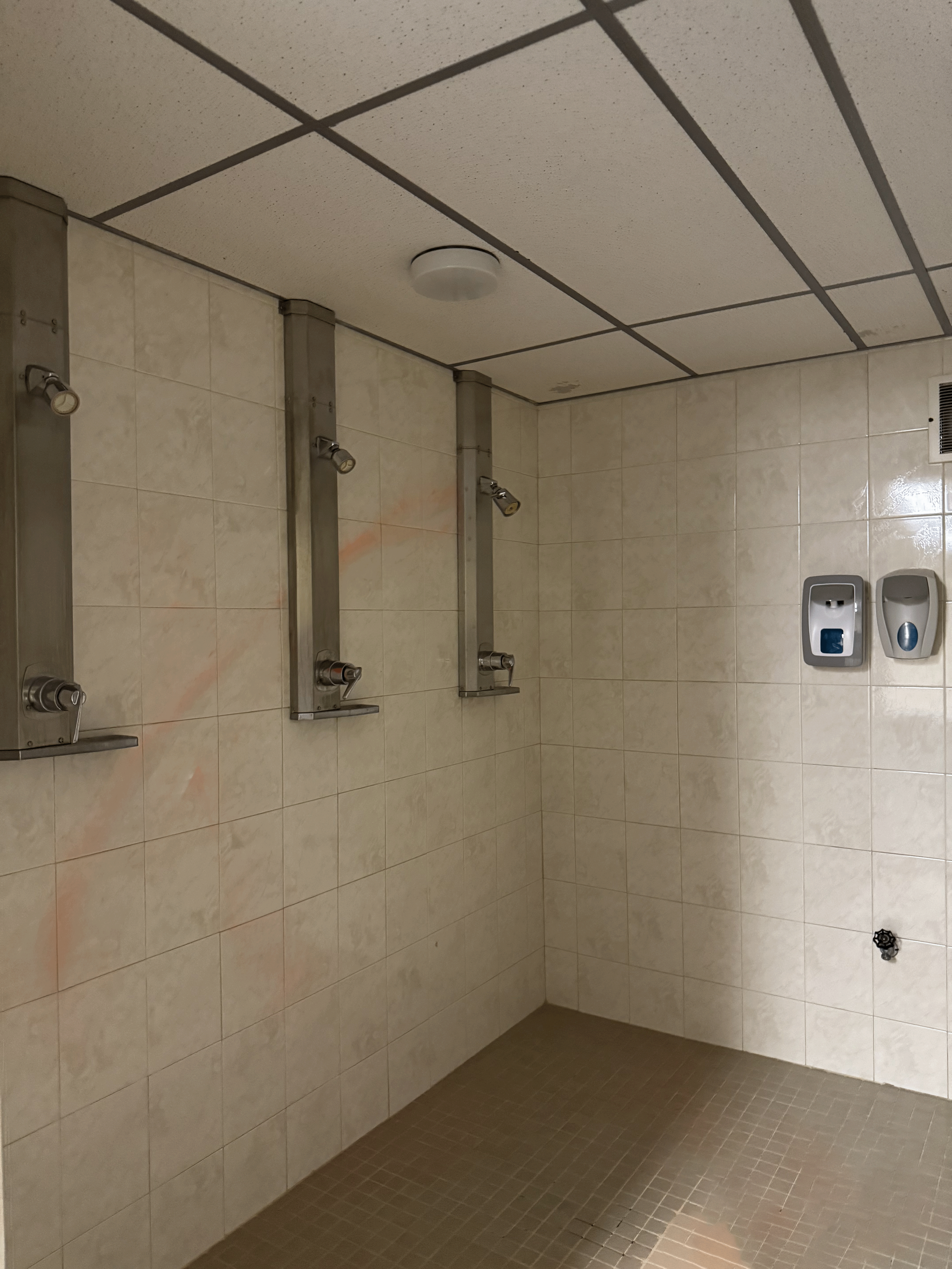
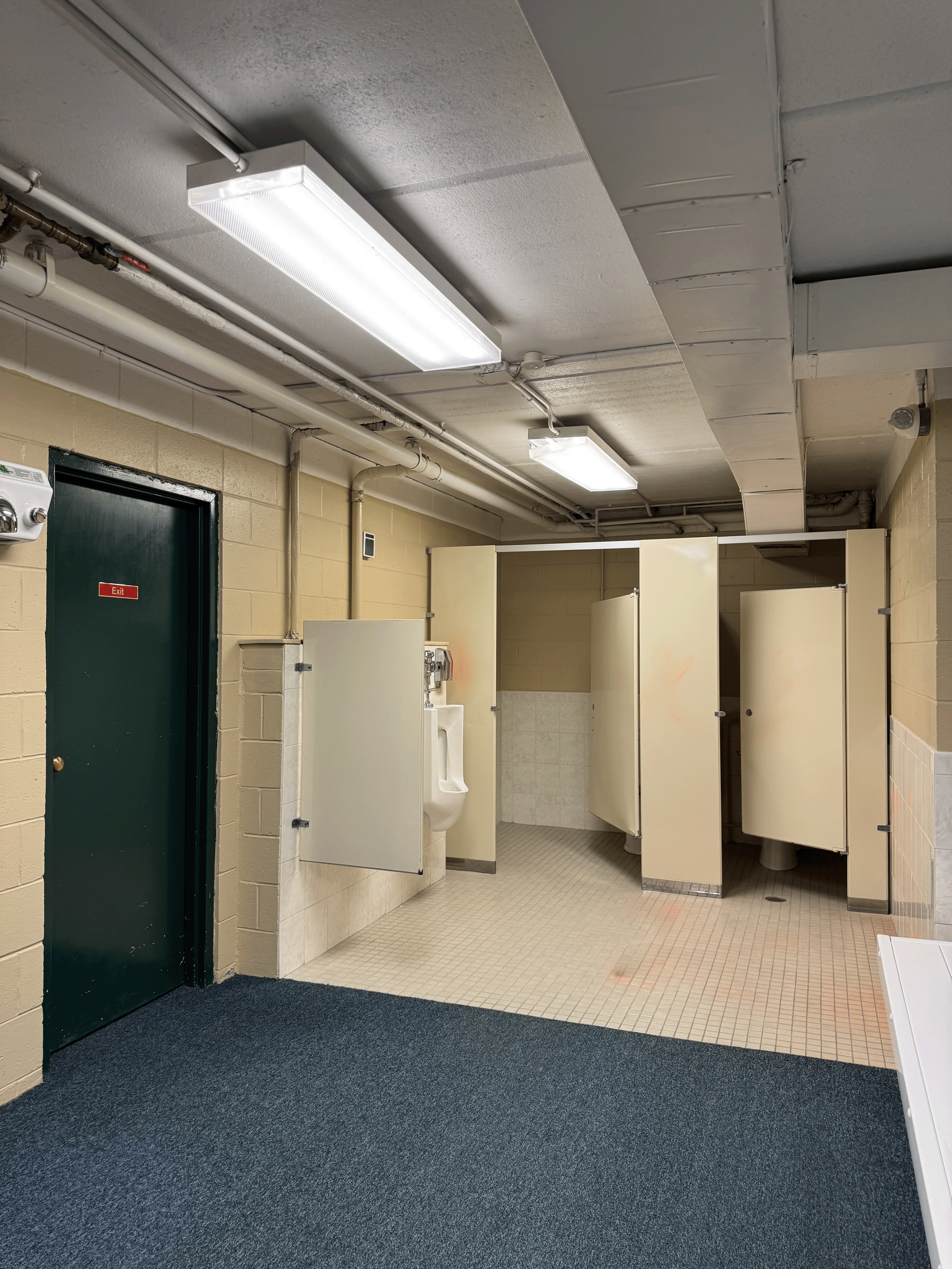
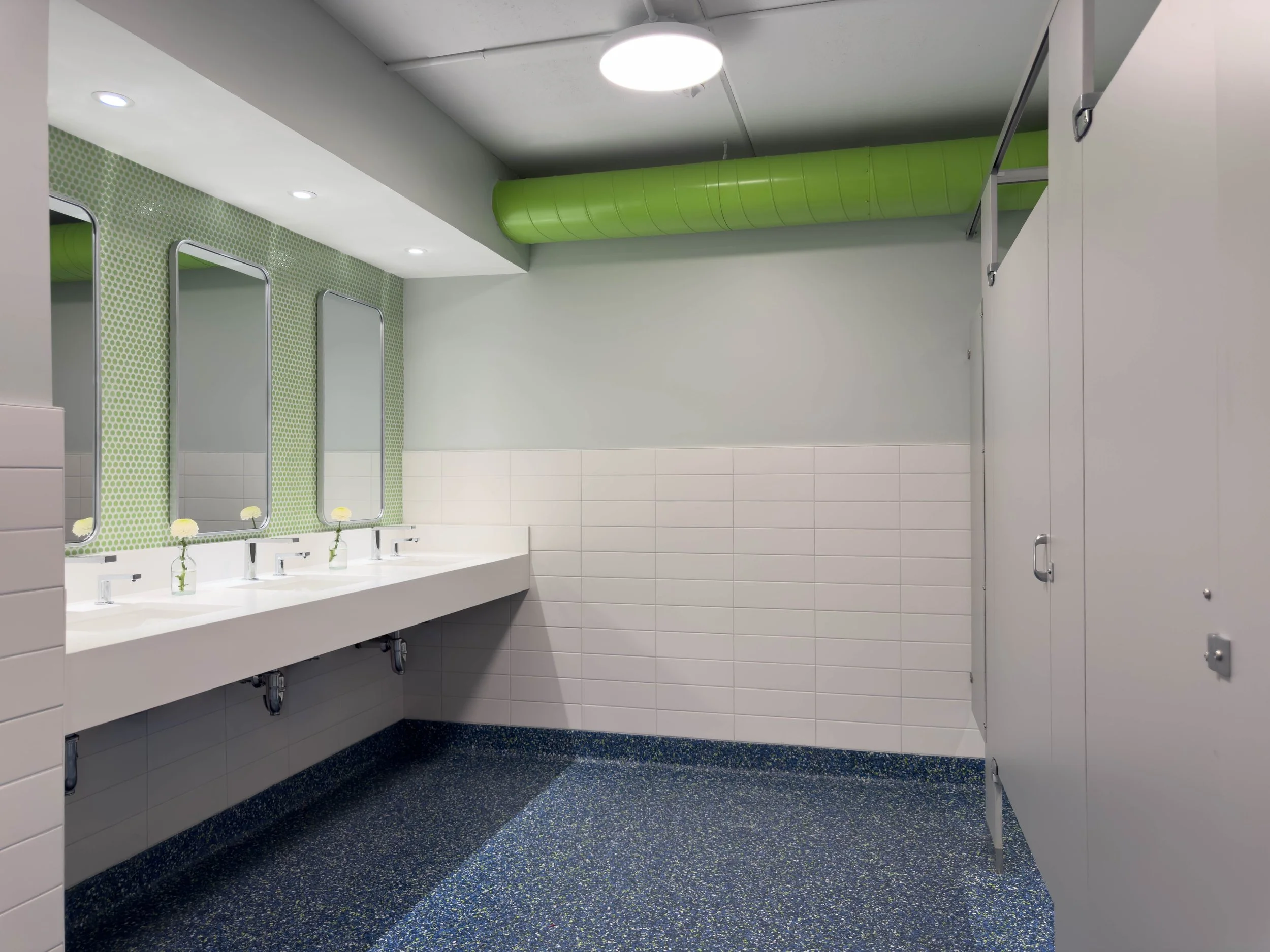
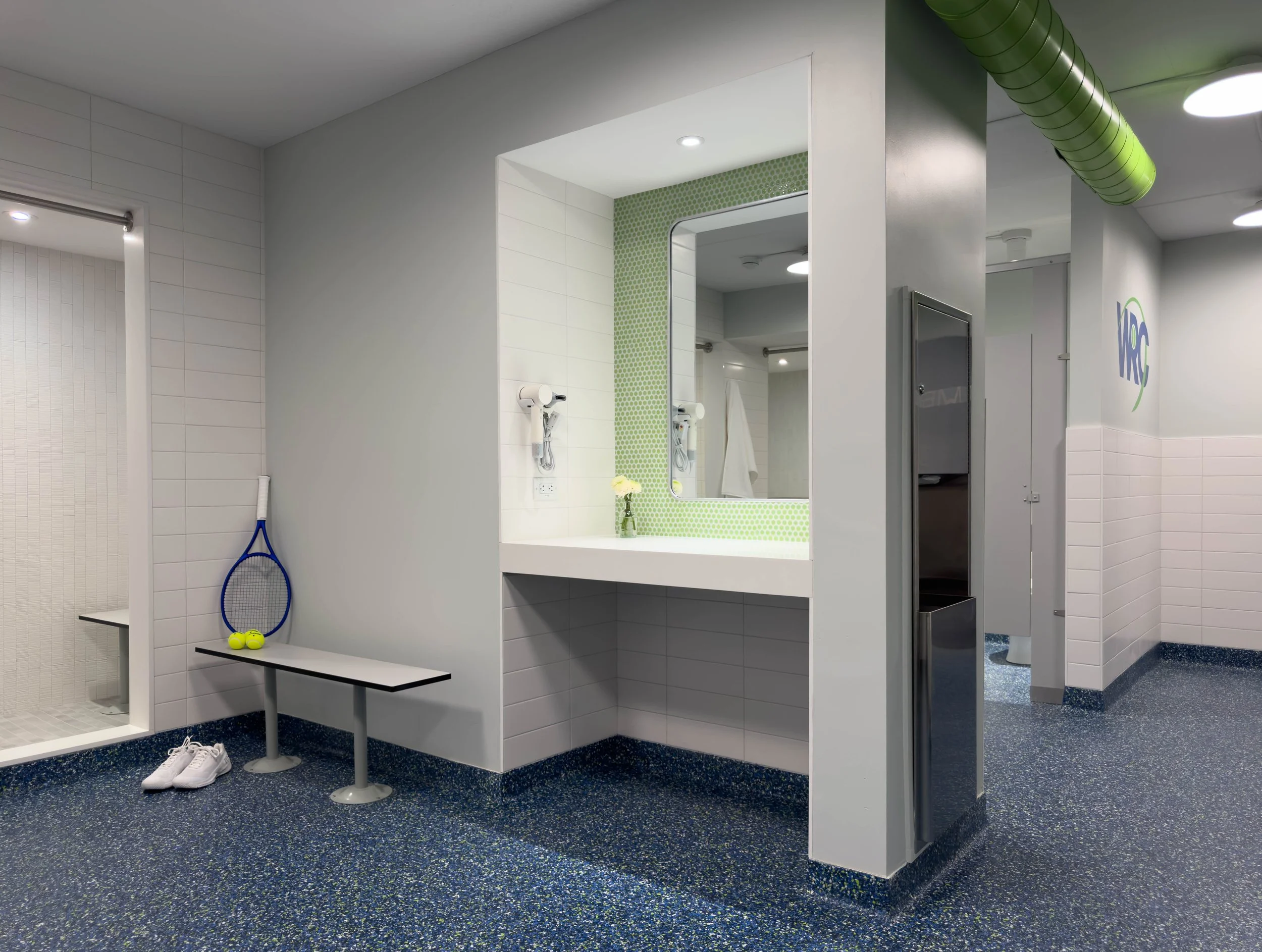
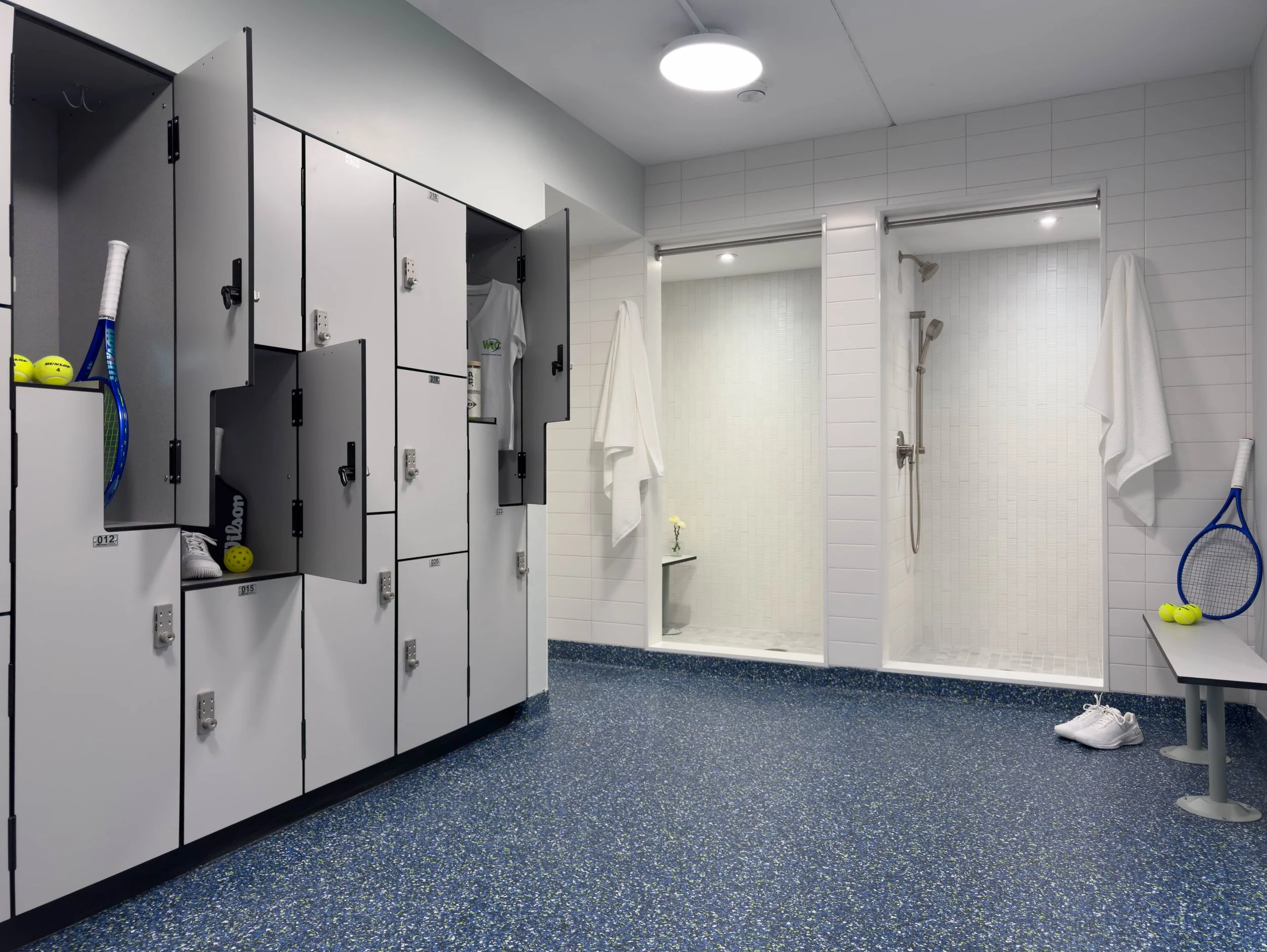
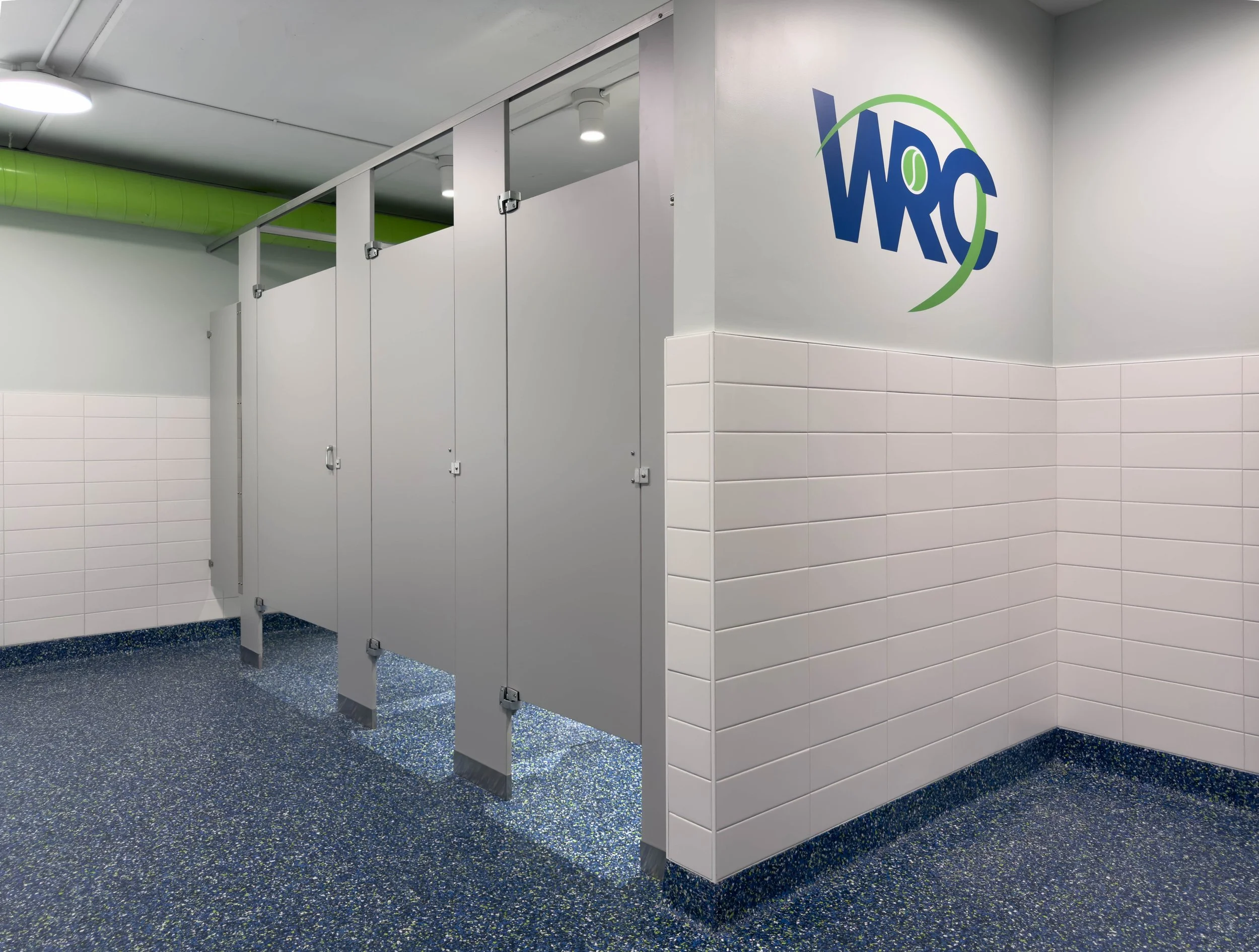
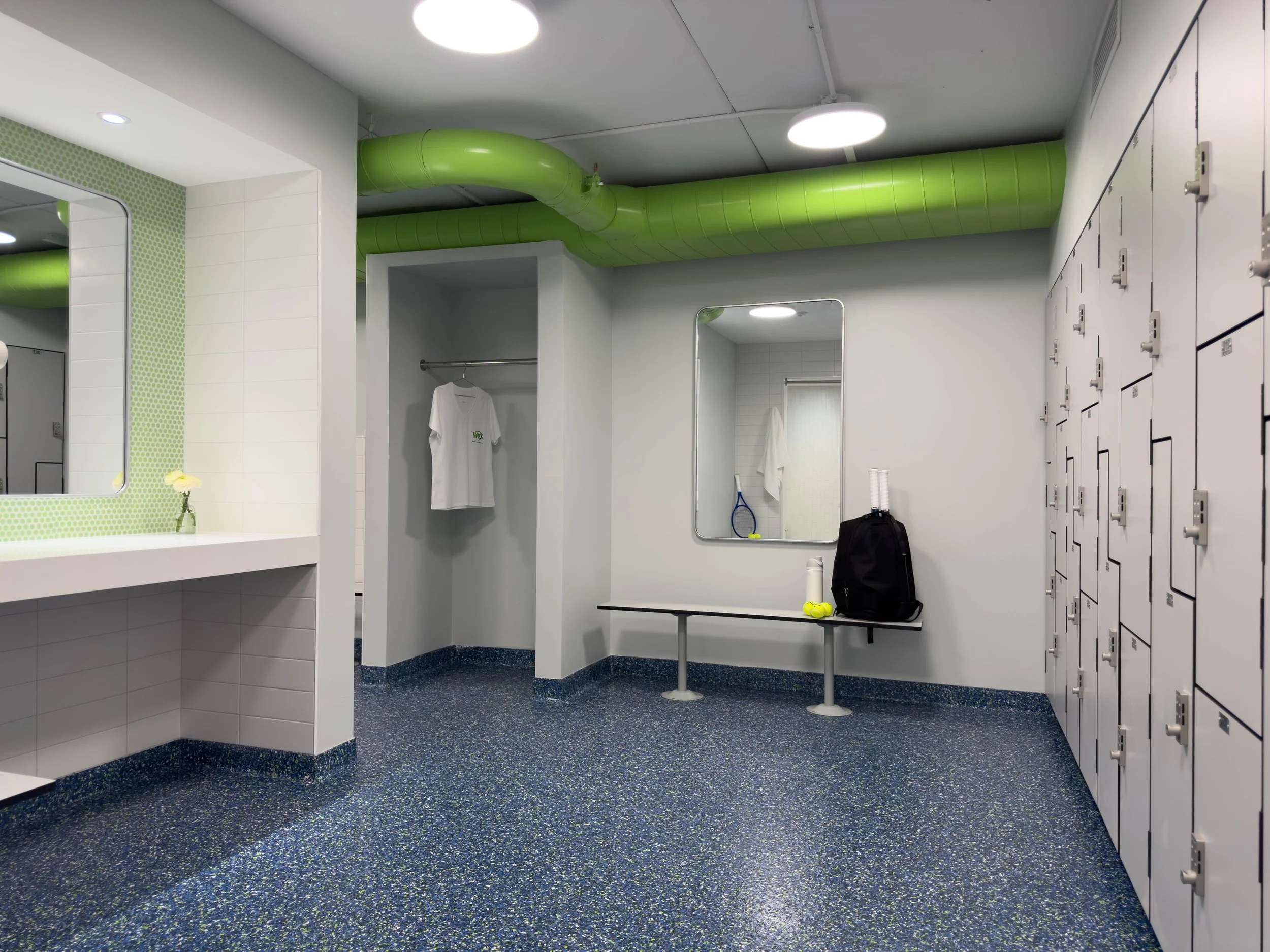
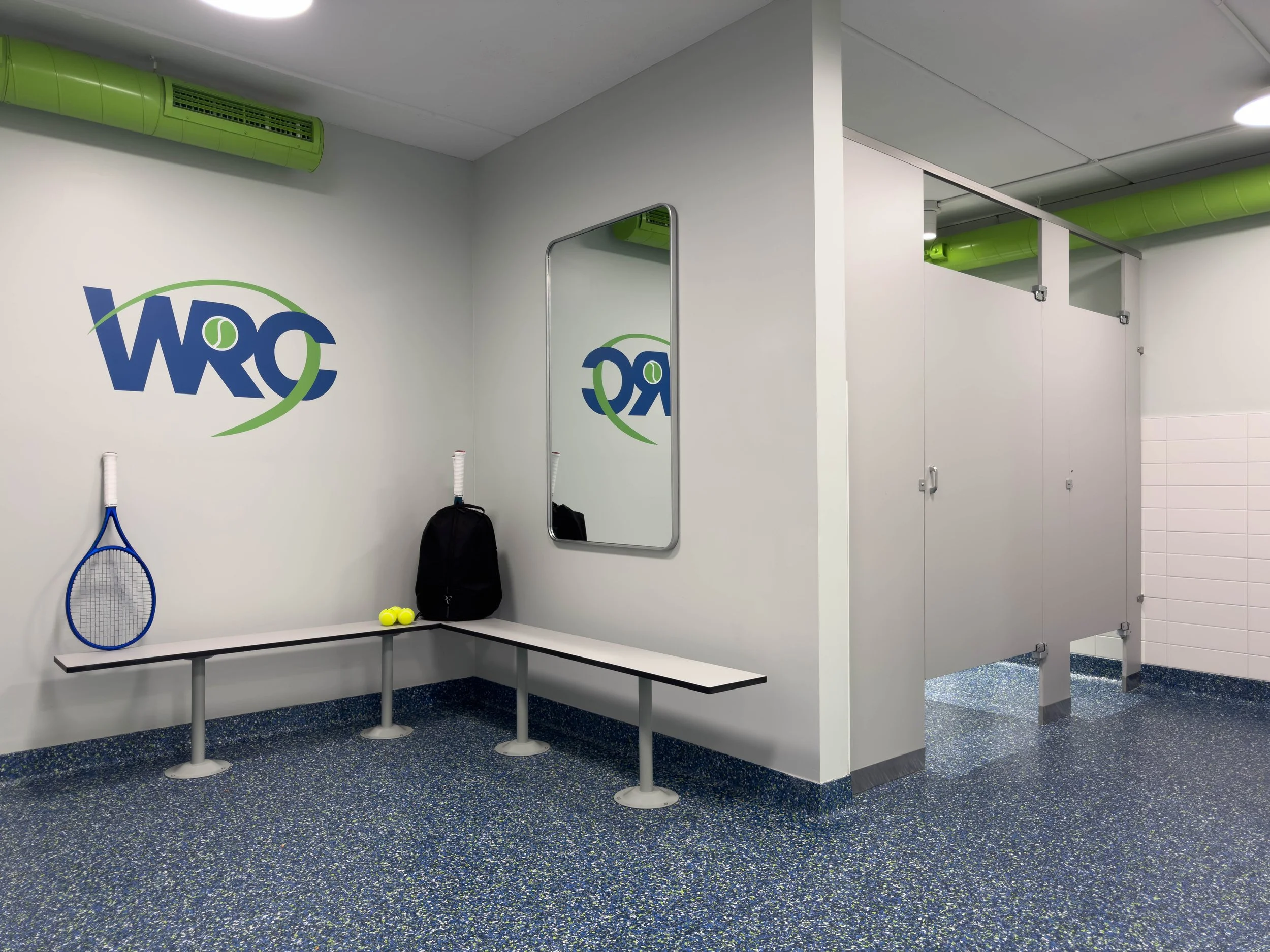
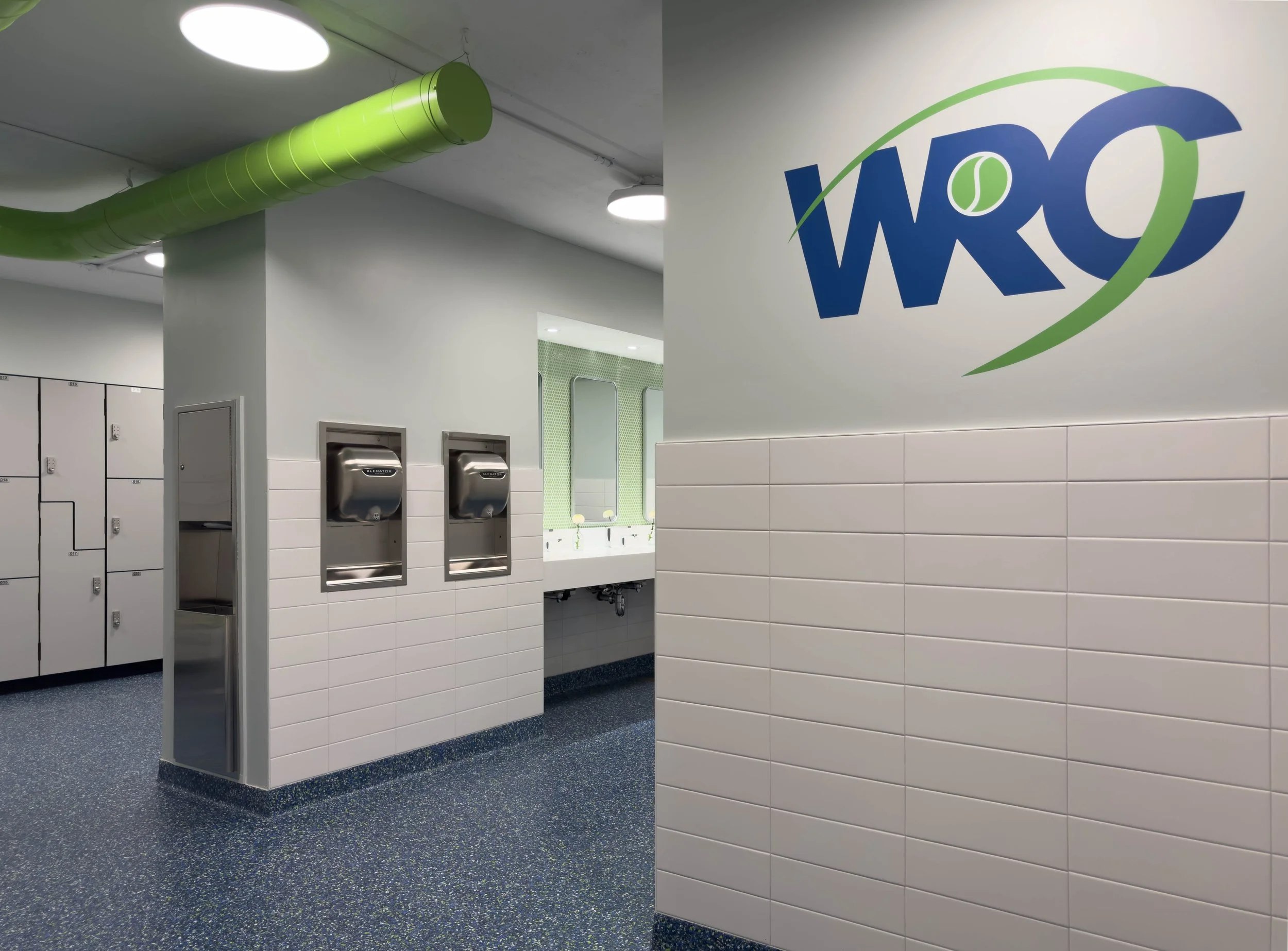
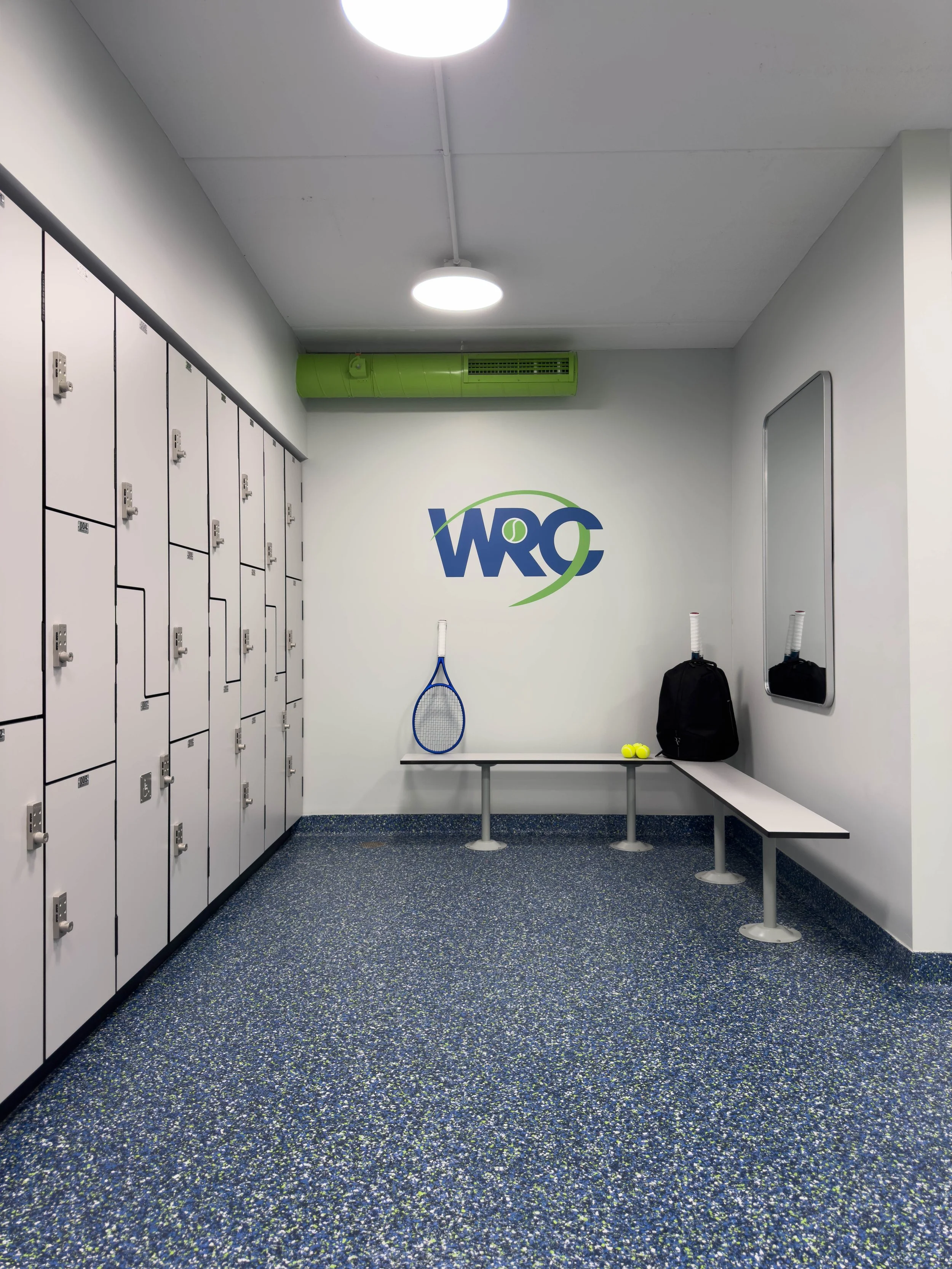
We pulled inspiration from the club’s logo to introduce color into the new spaces. Starting from the ground up, we customized the epoxy flooring by choosing a ratio of blues, green and white. This turned an industrial style material into a playful sea of color.
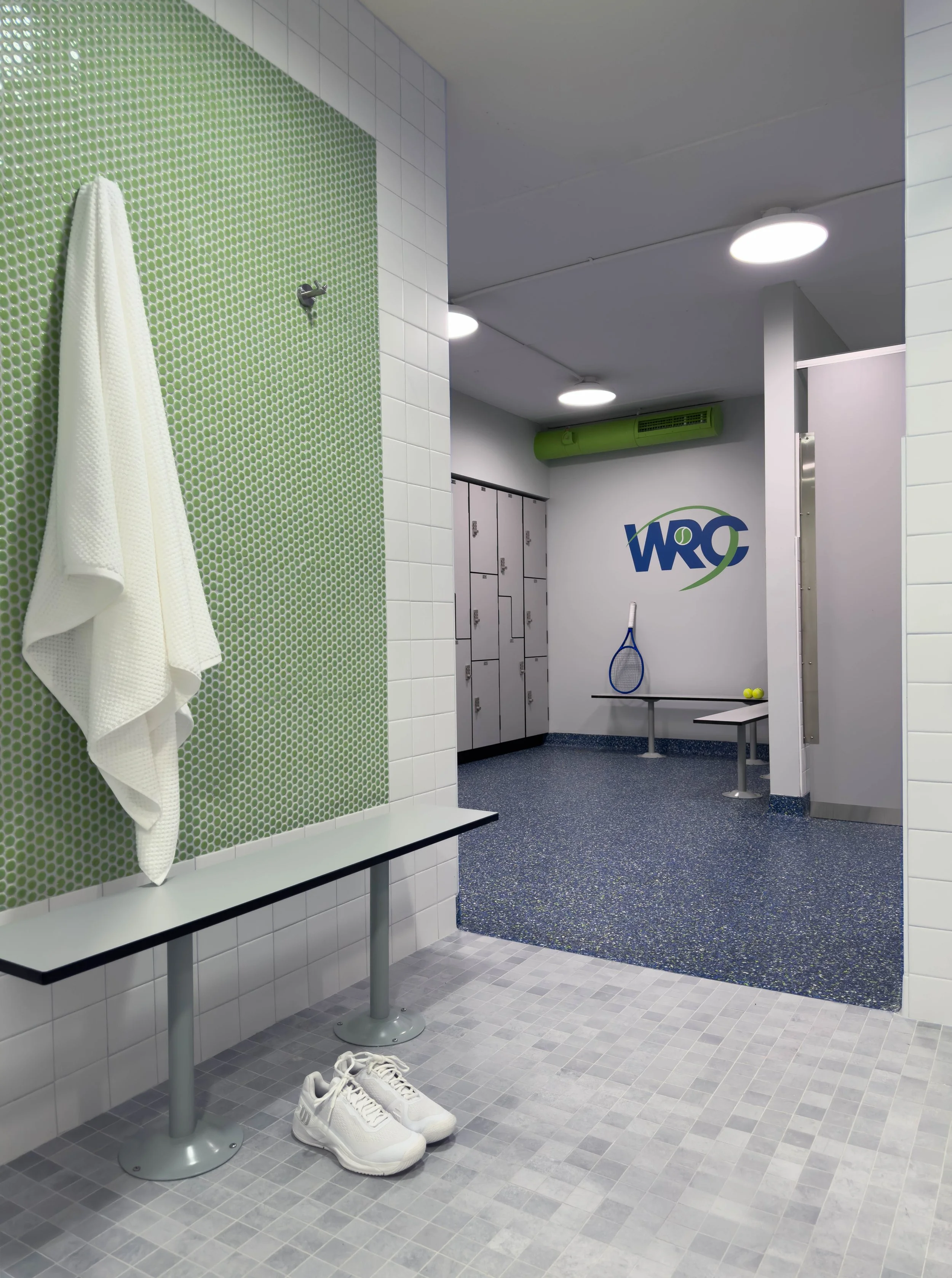
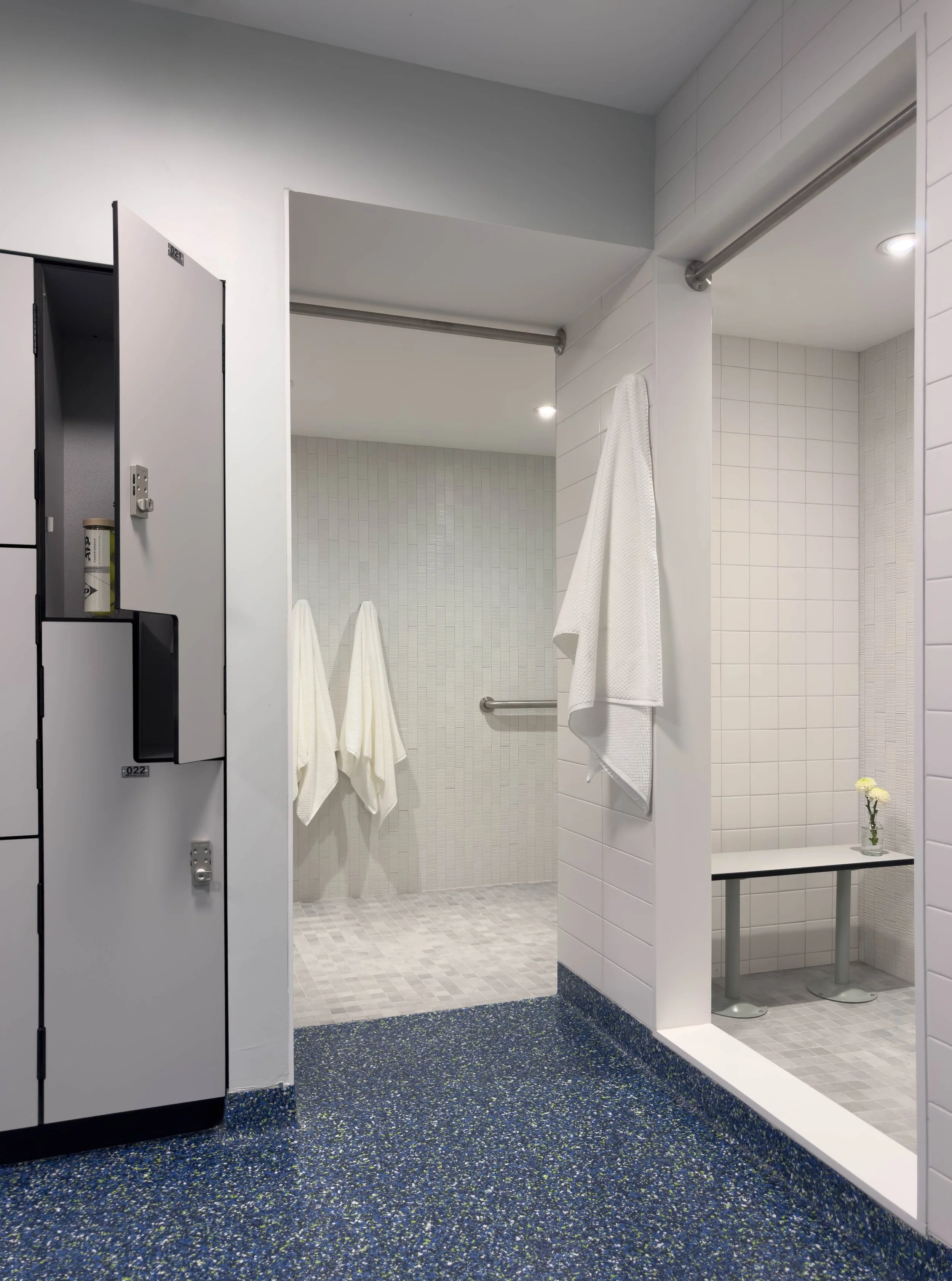
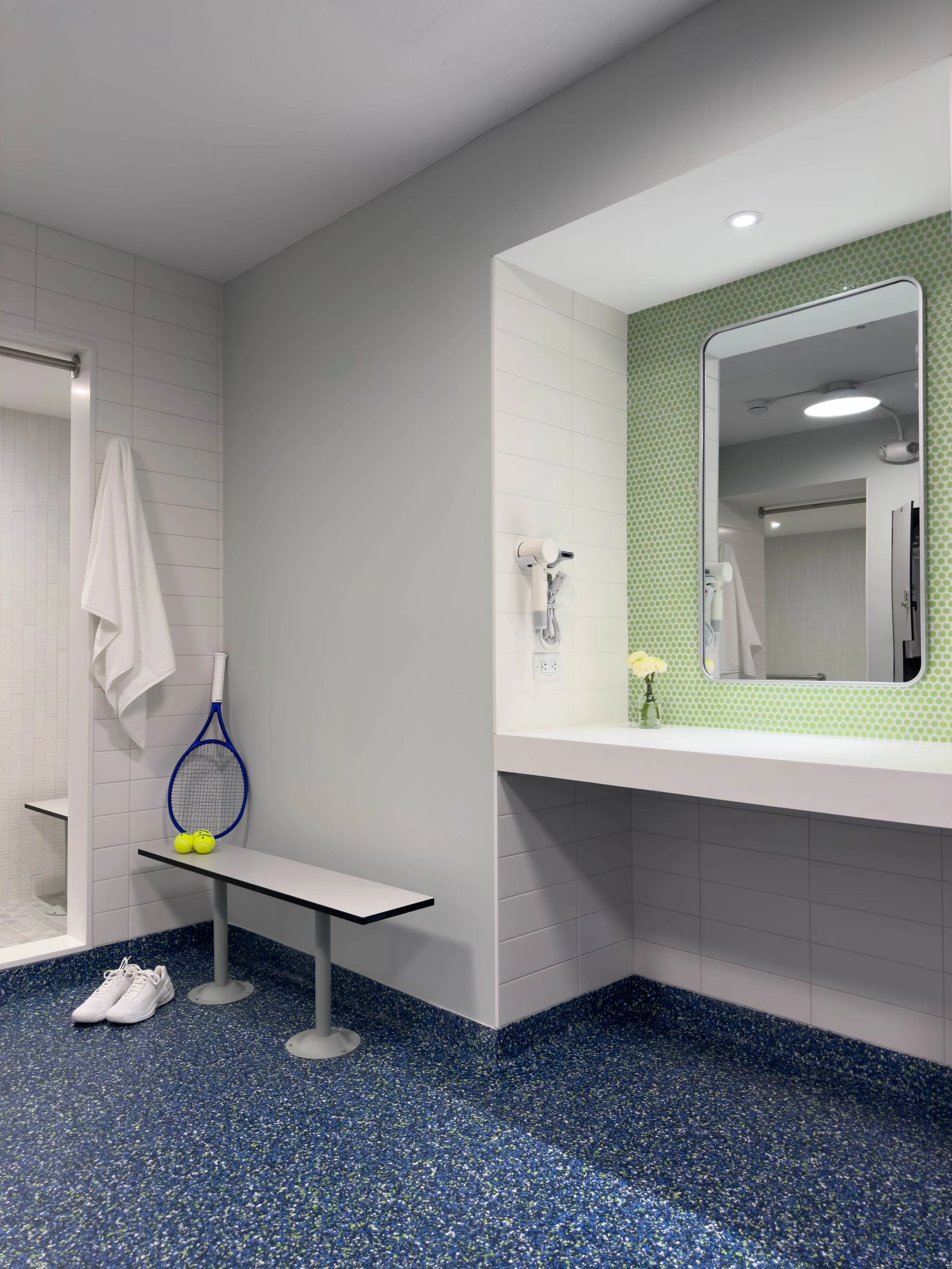
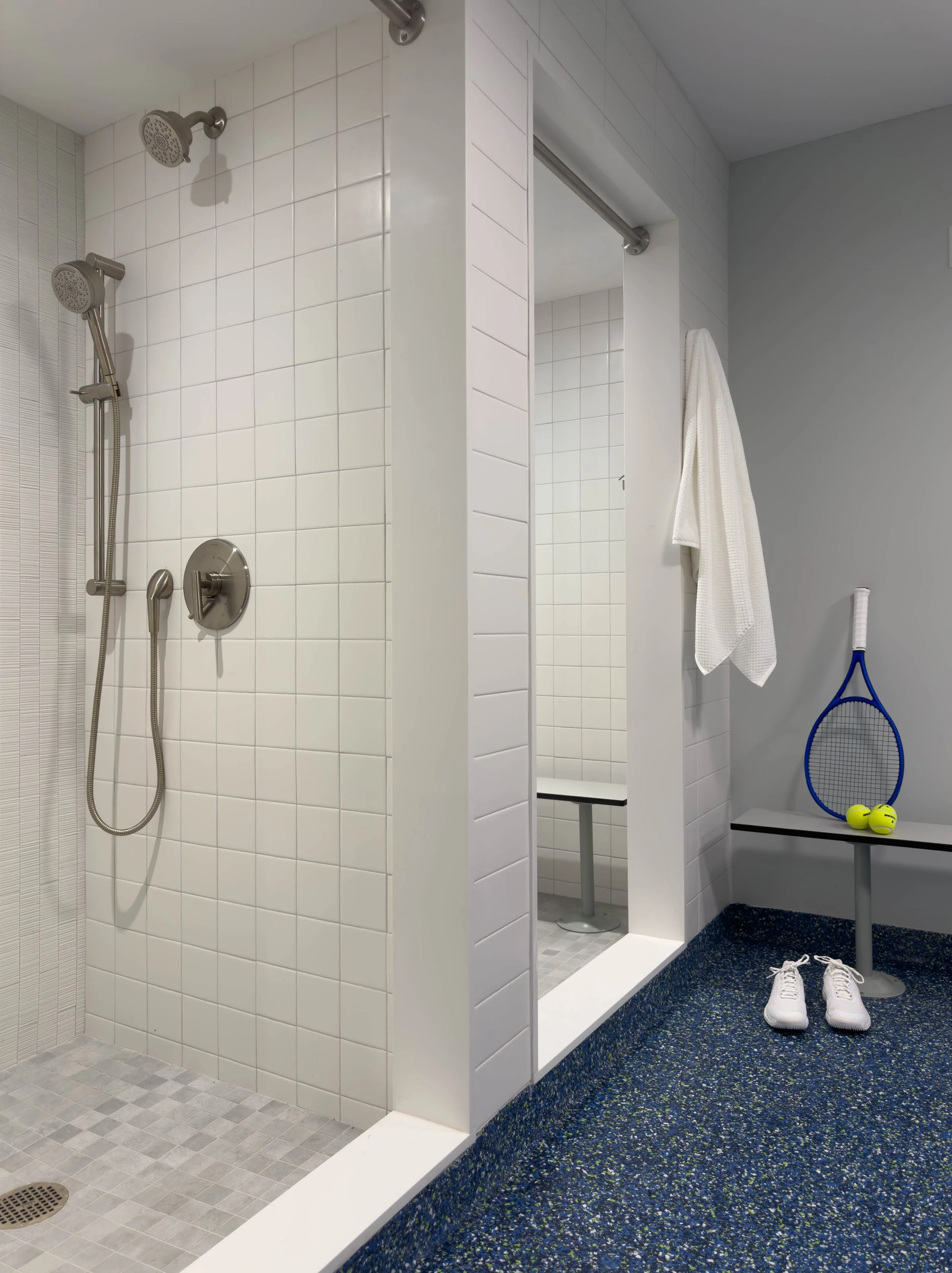
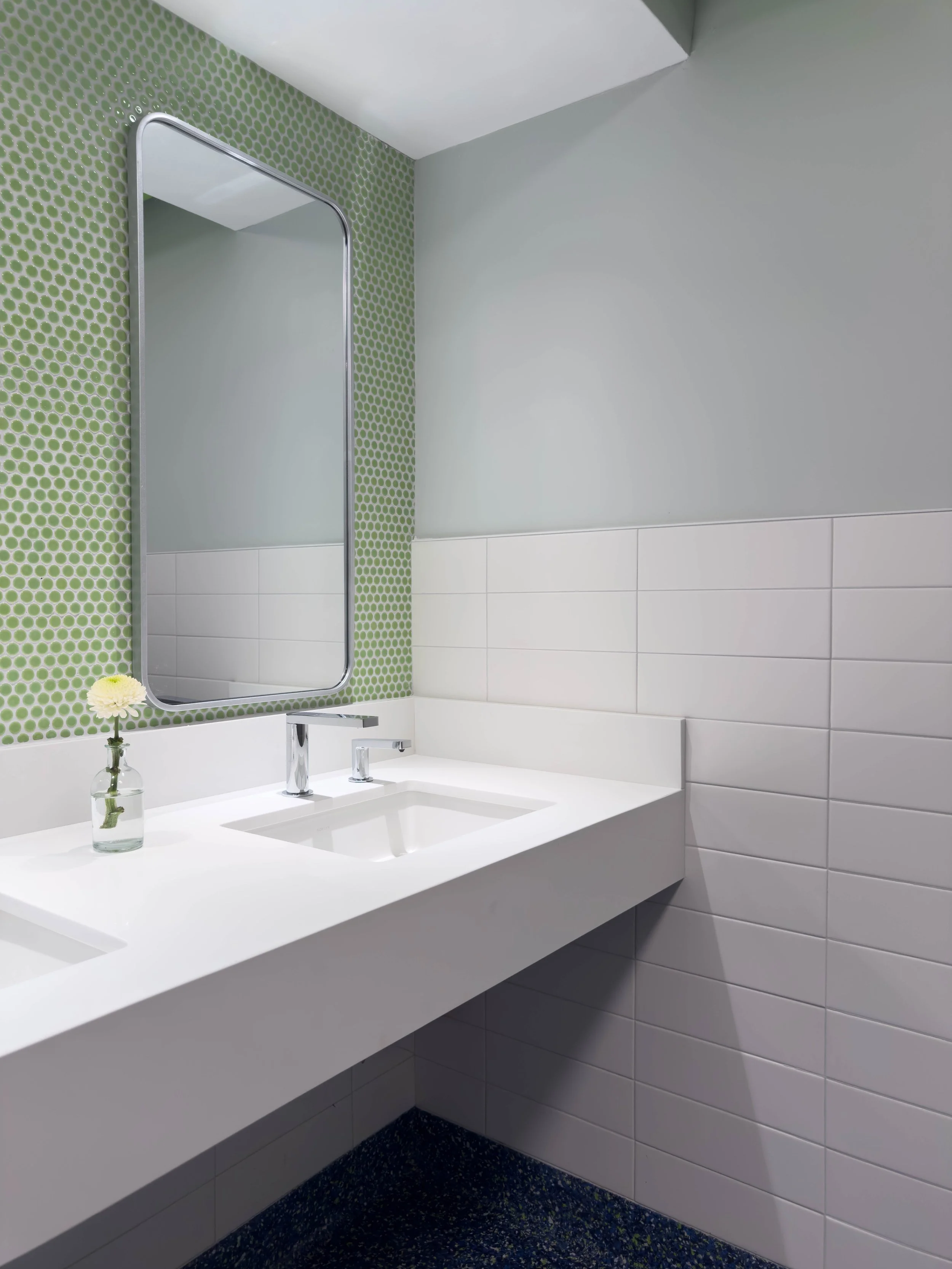
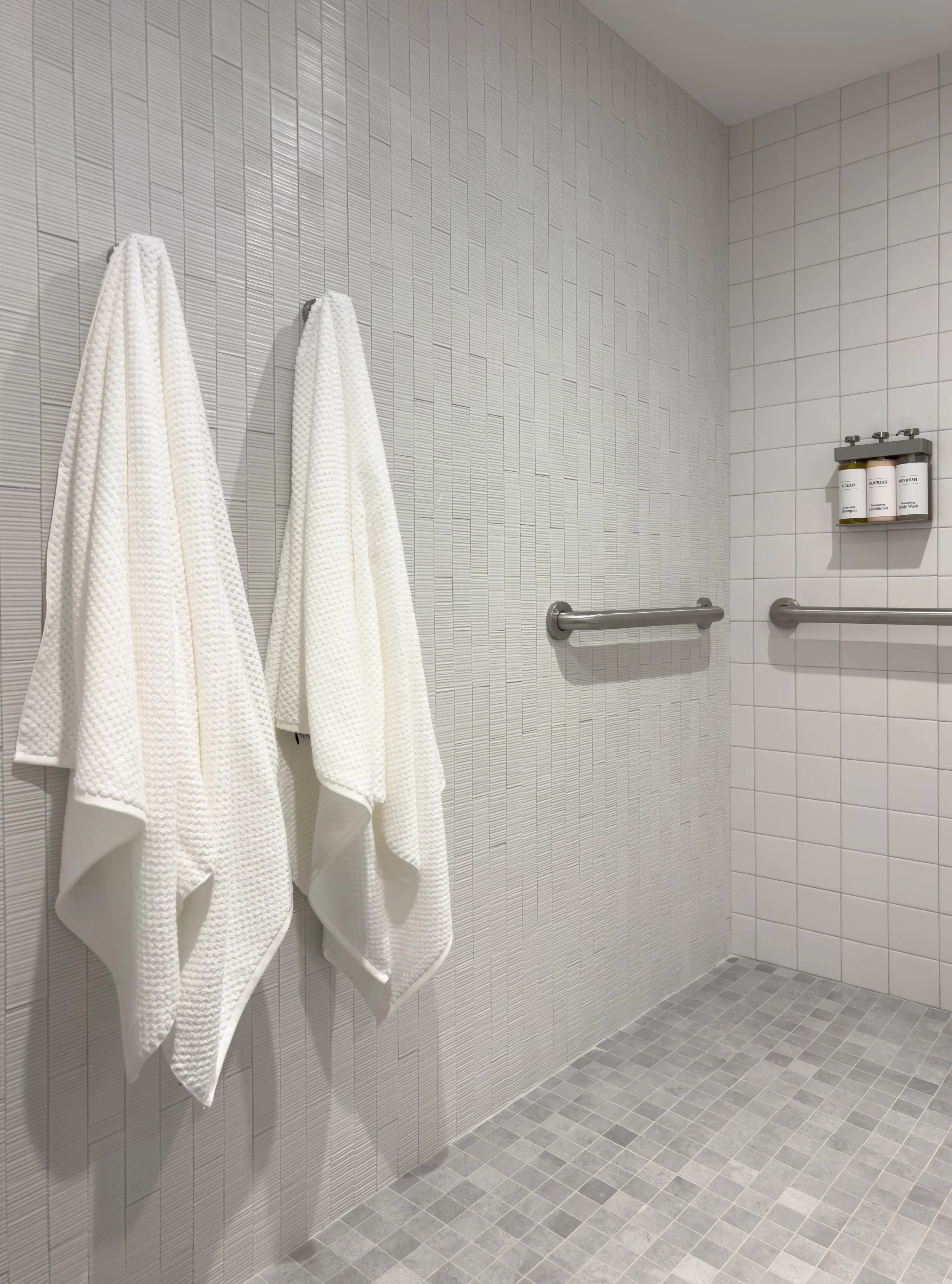
A high traffic building like a tennis club requires careful consideration when selecting materials. It’s more than just creating an aesthetic, it’s about long-lasting function too.
How Did We Achieve the Project Goals?
-
Improving existing spaces means upgrading them to today’s standards, including current requirements for accessibility. Often we hear the phrase, “well isn’t it grandfathered?” during initial conversations with clients. The answer to this question depends upon the extent of the work and the associated cost of the project as it relates to the overall assessed value of the building.
The project was a lot more than a quick refresh. After evaluating the existing layouts and their limitations, replacing in place wasn’t going to bring these locker rooms into compliance or be a beneficial long-term investment. With a complete reconfiguration of both the women’s and men’s spaces, we were able to refine the floor plans for optimal function and accessibility for years to come.
-
Selecting resilient materials in high traffic spaces like locker rooms, supports their longevity and makes for easier cleaning and regular maintenance. Undergoing renovations in an existing building, especially while maintaining operations, is no small task. Owner’s want their investments to last and this expectation is prioritized when selecting materials during design.
The challenge? Finding balance between form, function and cost. We evaluated options for flooring, toilet partitions, lockers, plumbing fixtures, countertops, wall tile and paint. Collaborating with specialty trades allowed us to weigh the pros and cons in selecting different materials and present schemes that were in alignment with the project goals.
-
A customer experience is shaped by more than just the products and services. The physical space and overall aesthetic of the environment reinforces the brand. How do you want your customers to feel? What do you want them to be reminded of while they are in your building? What do you want them to remember when they leave?
A high traffic building like a tennis club requires careful consideration when selecting materials. It’s more than just creating an aesthetic, it’s about long-lasting function too. We pulled inspiration from the club’s logo to introduce color into the new spaces. Starting from the ground up, we customized the epoxy flooring by choosing a ratio of blues, green and white. This turned an industrial style material into a playful sea of color. Keeping the overall backdrop neutral with whites and cool grays, we wanted to highlight special areas within the spaces and draw the eye upward with the use of lime green accent tile and painted ductwork.
-
Should you or should you not phase a project? Analyzing the feasibility and potential cost implications of phasing begins during design development. How isolated are the areas of work from one another? If there is overlap, what can we anticipate would need to be reworked as a result of phasing the construction? Do these spaces share building systems that would be impacted by construction now or in the future? What are potential design limitations that we could encounter by not building the project in its entirety all at one time? An integrated design process takes these questions into consideration.
In a large building like this one, the projects are more easily phased. Streamlining the ground level building circulation to create direct access to the pickleball courts at the rear of the site was planned for in this phase. The design for the new locker rooms included claiming area from the oversized men’s room to extend the main corridor from the lobby to a point where future work would not have a negative impact on the newly constructed spaces. A very simple decision that makes continued improvements in this building much easier.
Existing Floor Plan
Proposed Floor Plan
Phases of Construction
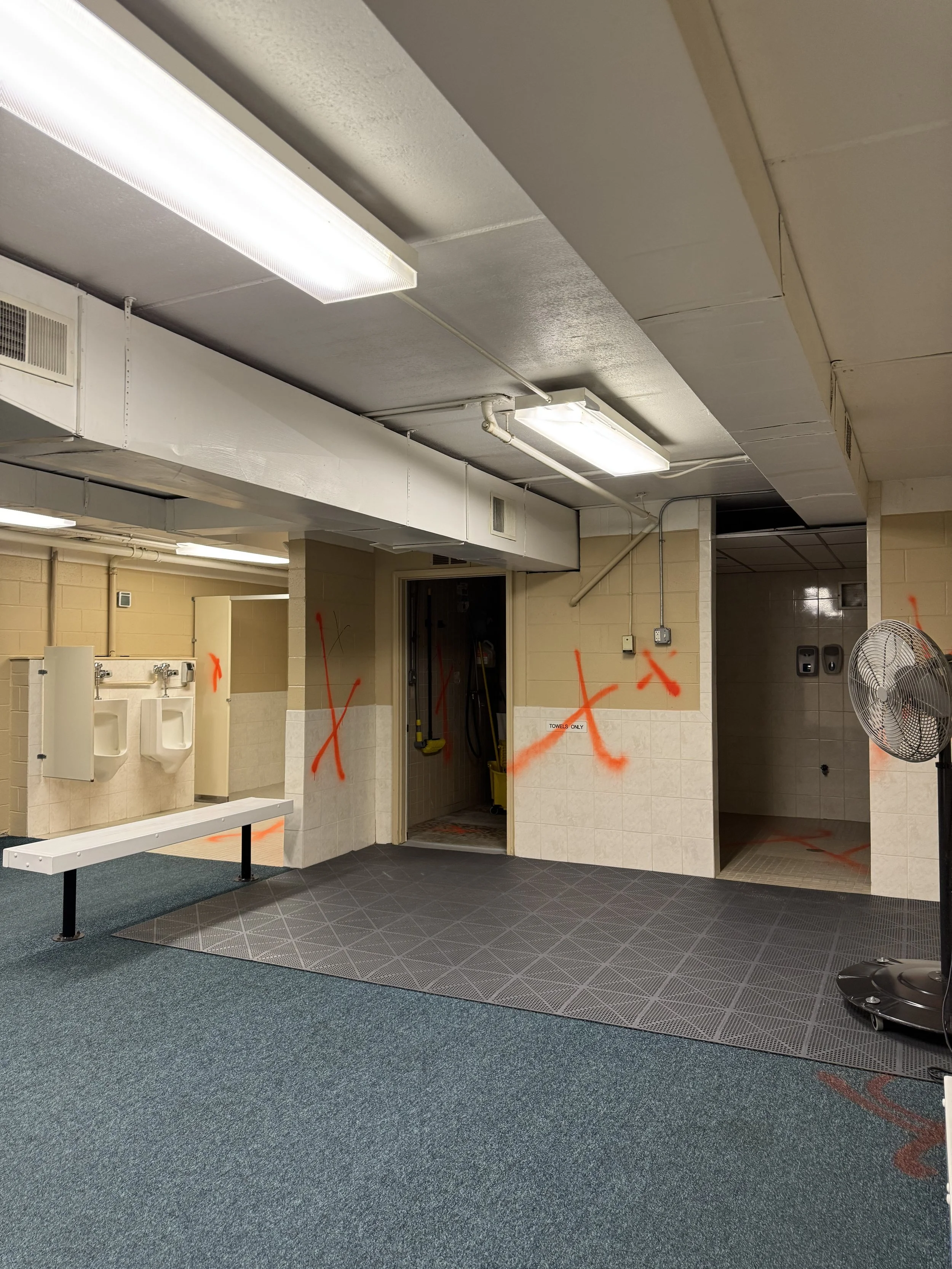
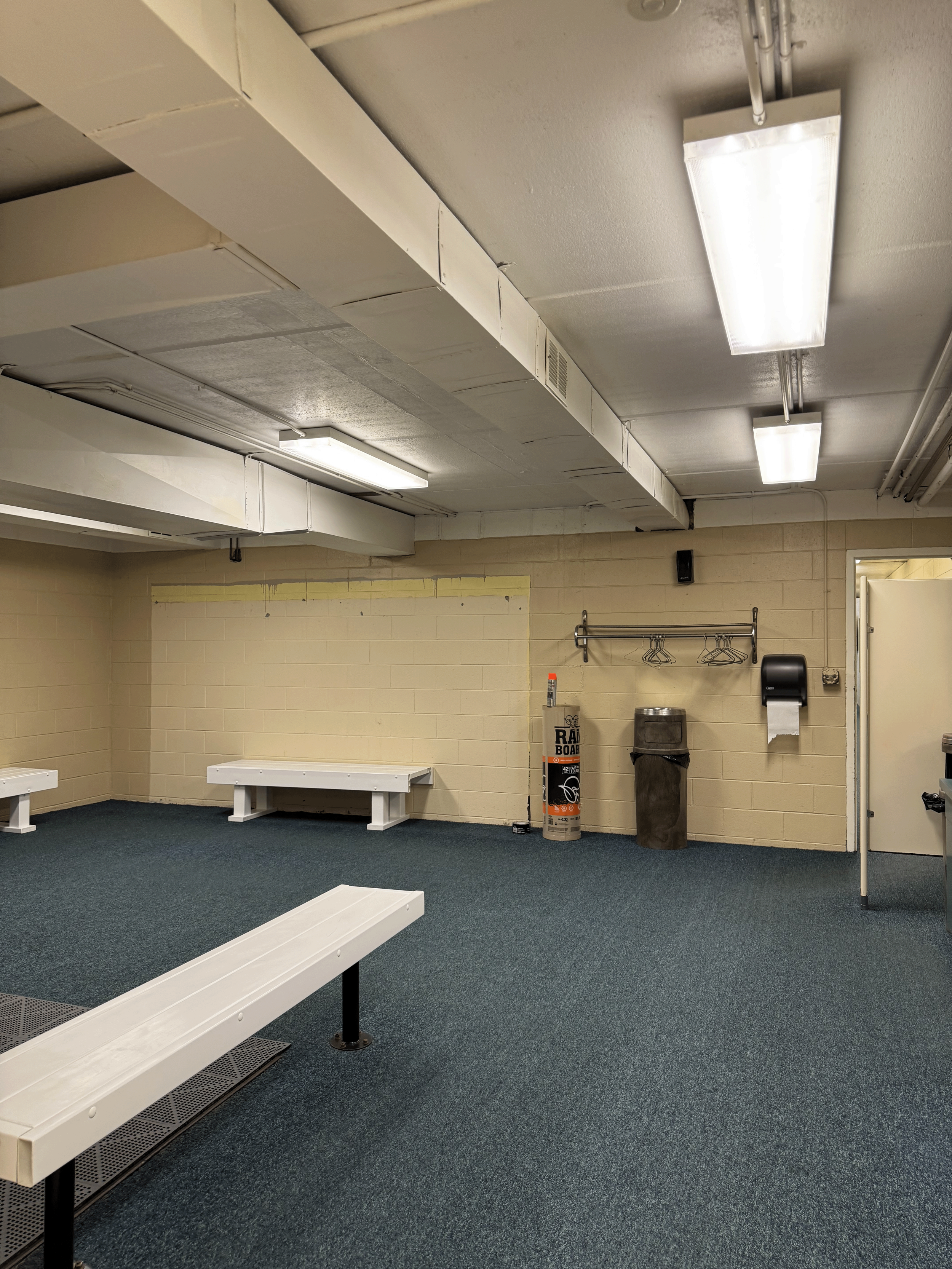
Existing Conditions
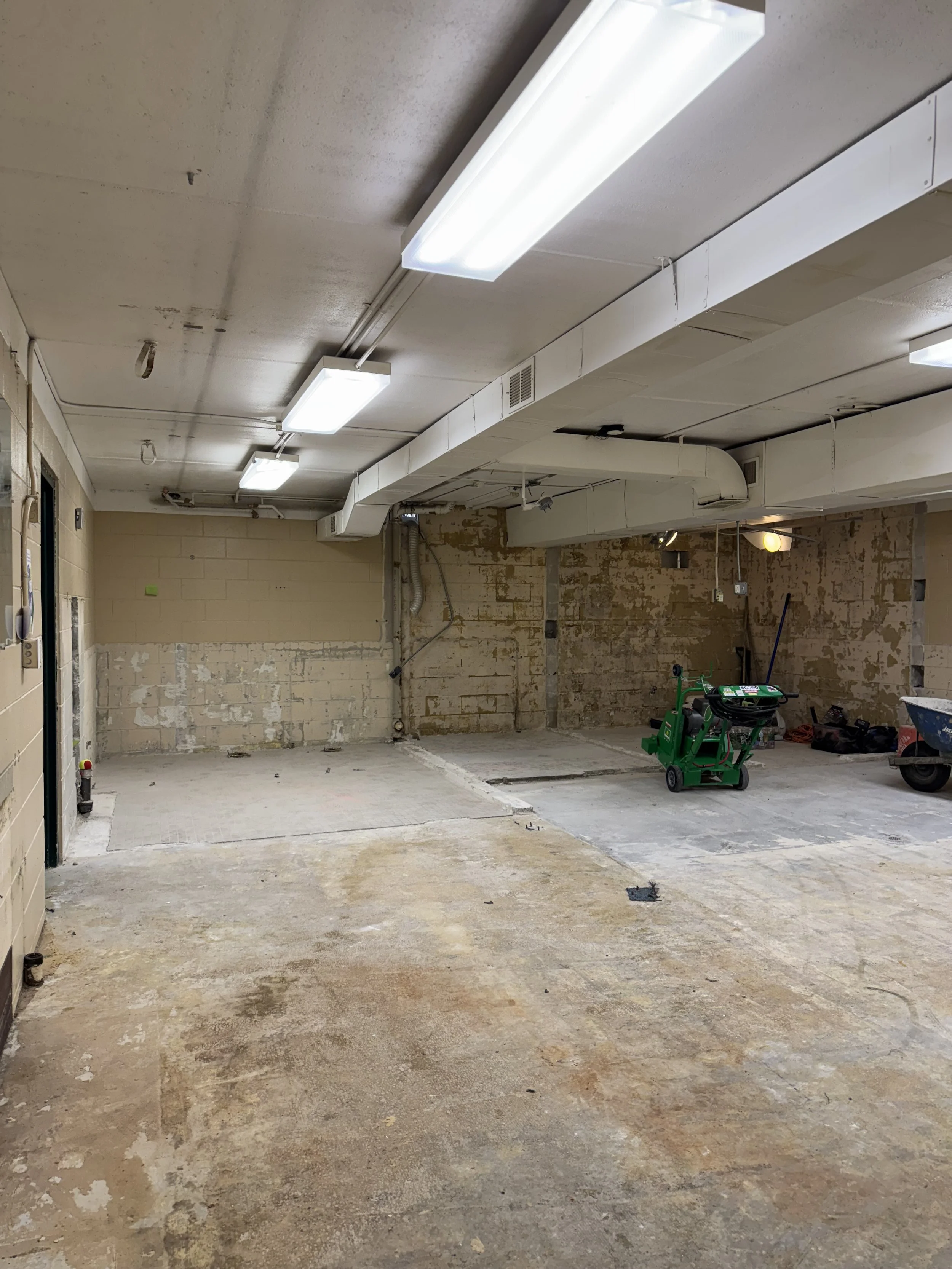
Demolition
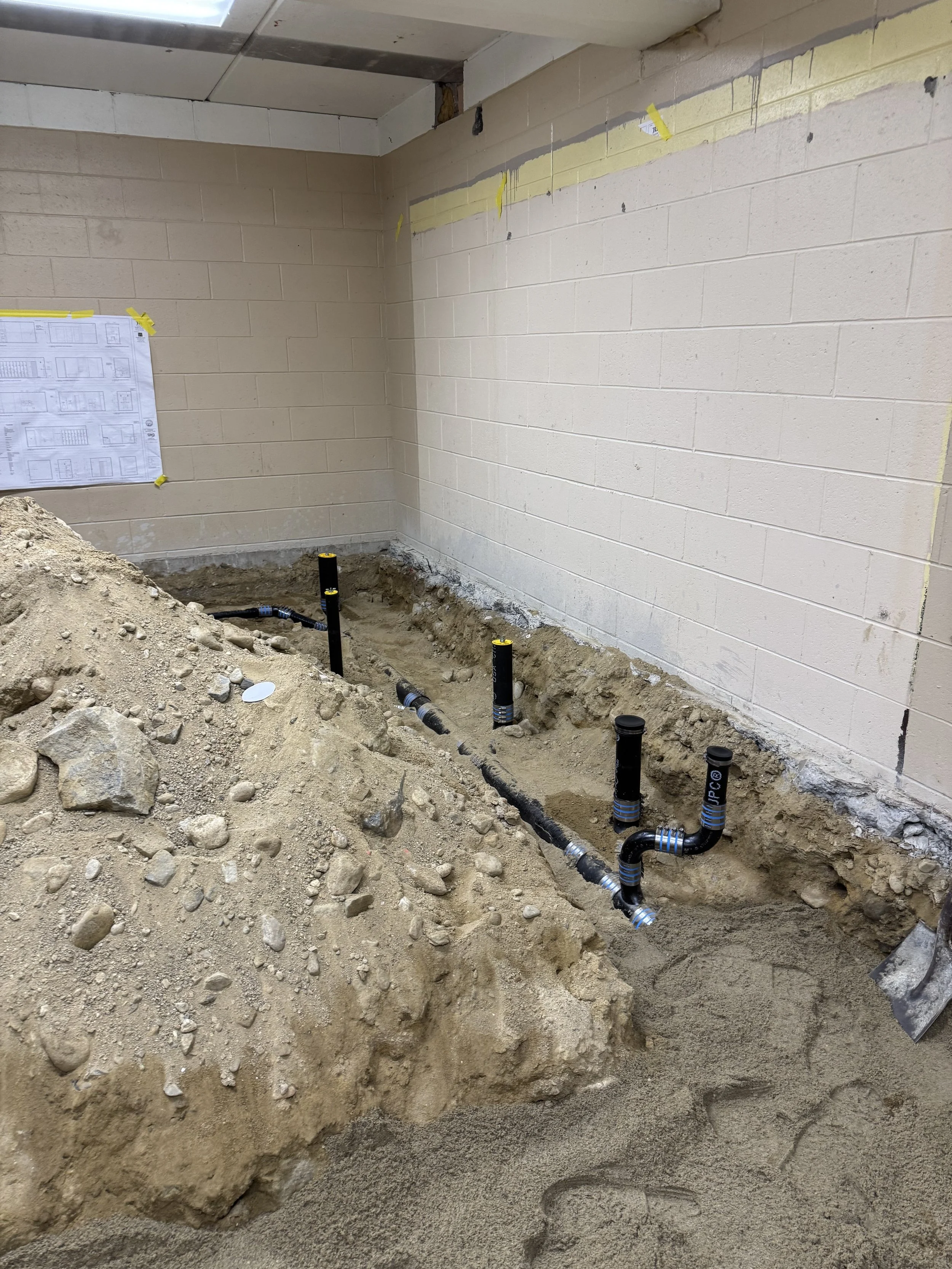
Underground Plumbing Rough
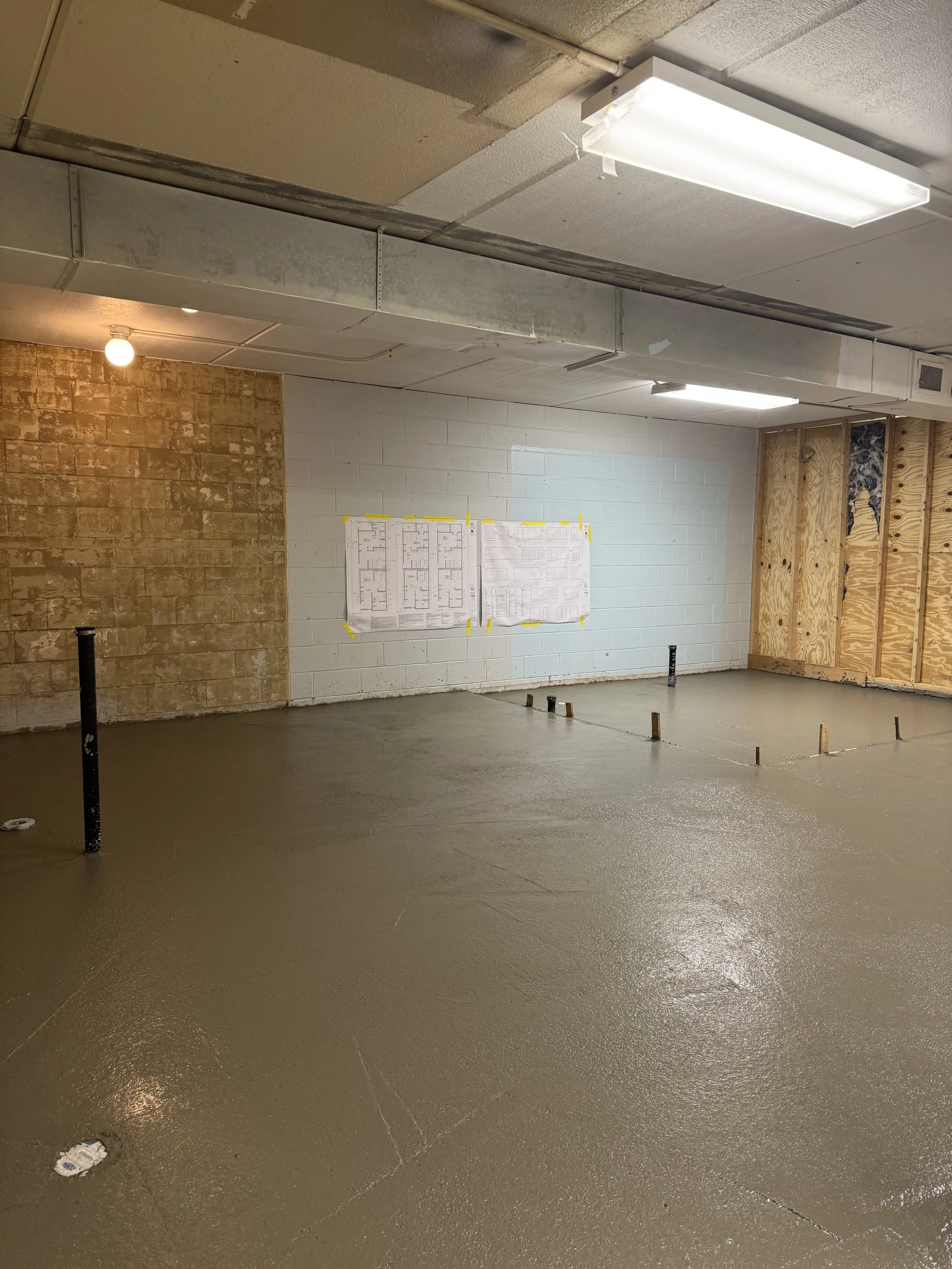
New Slab Pour
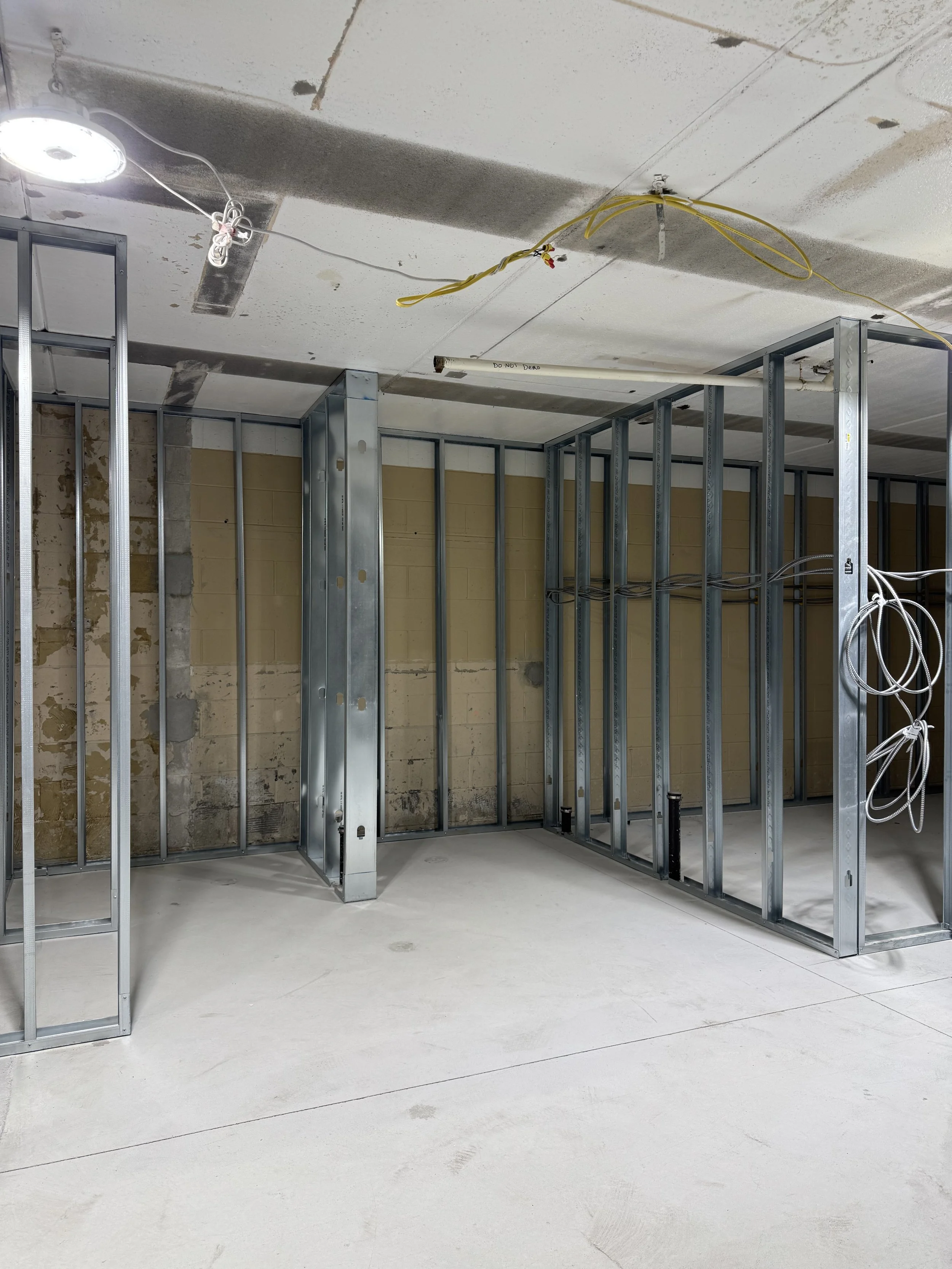
Framing
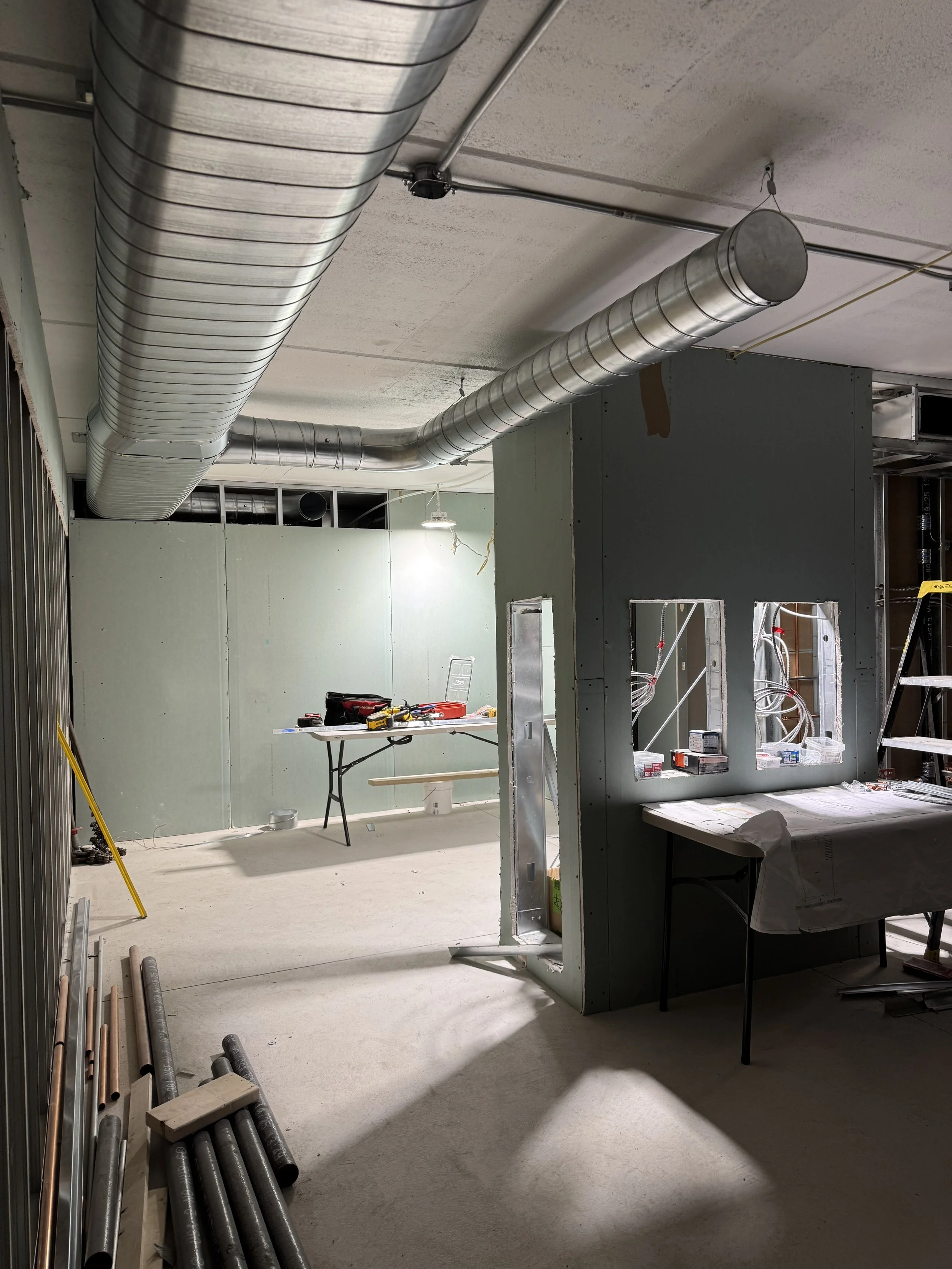
Rough-In
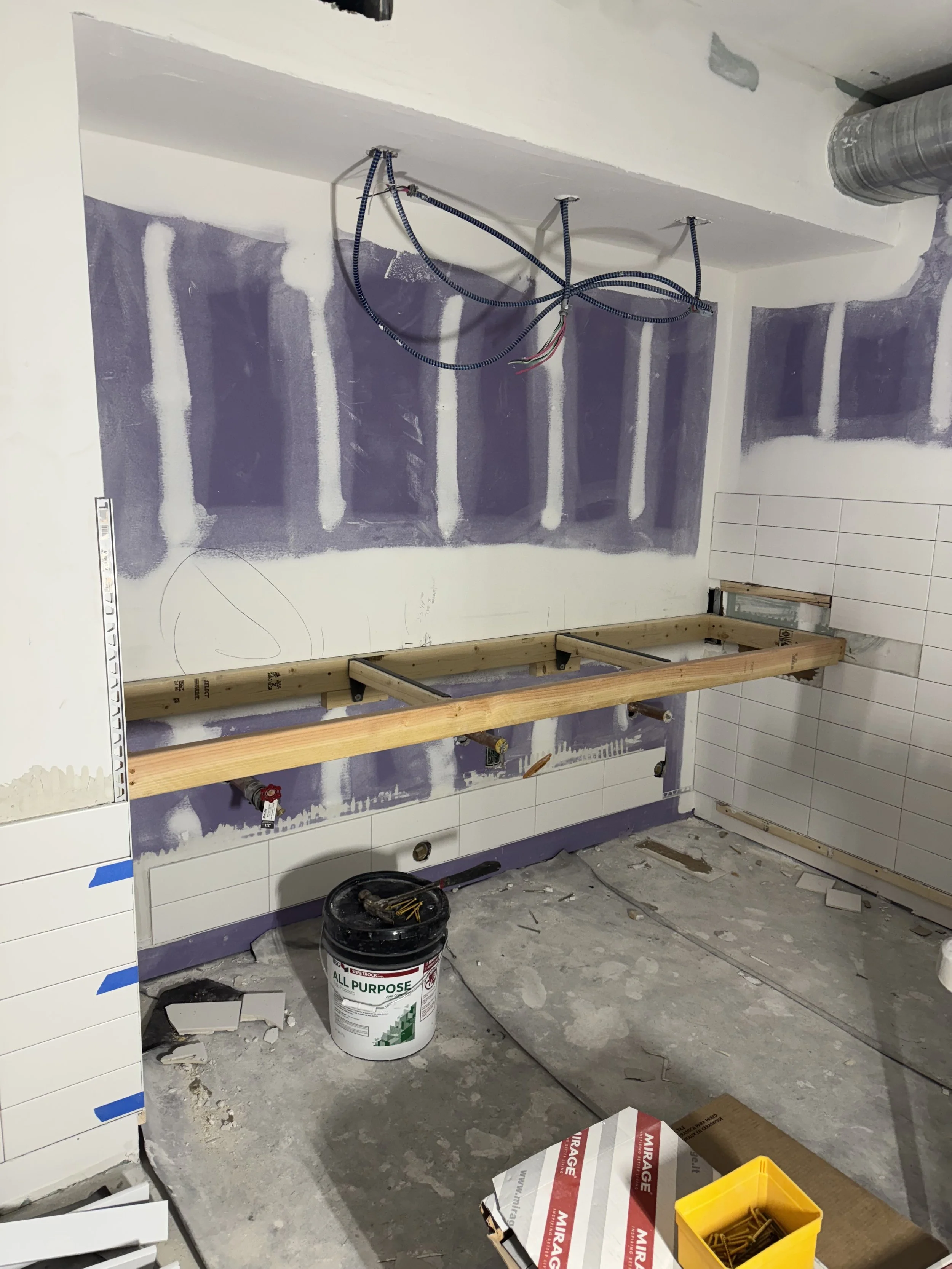
Drywall
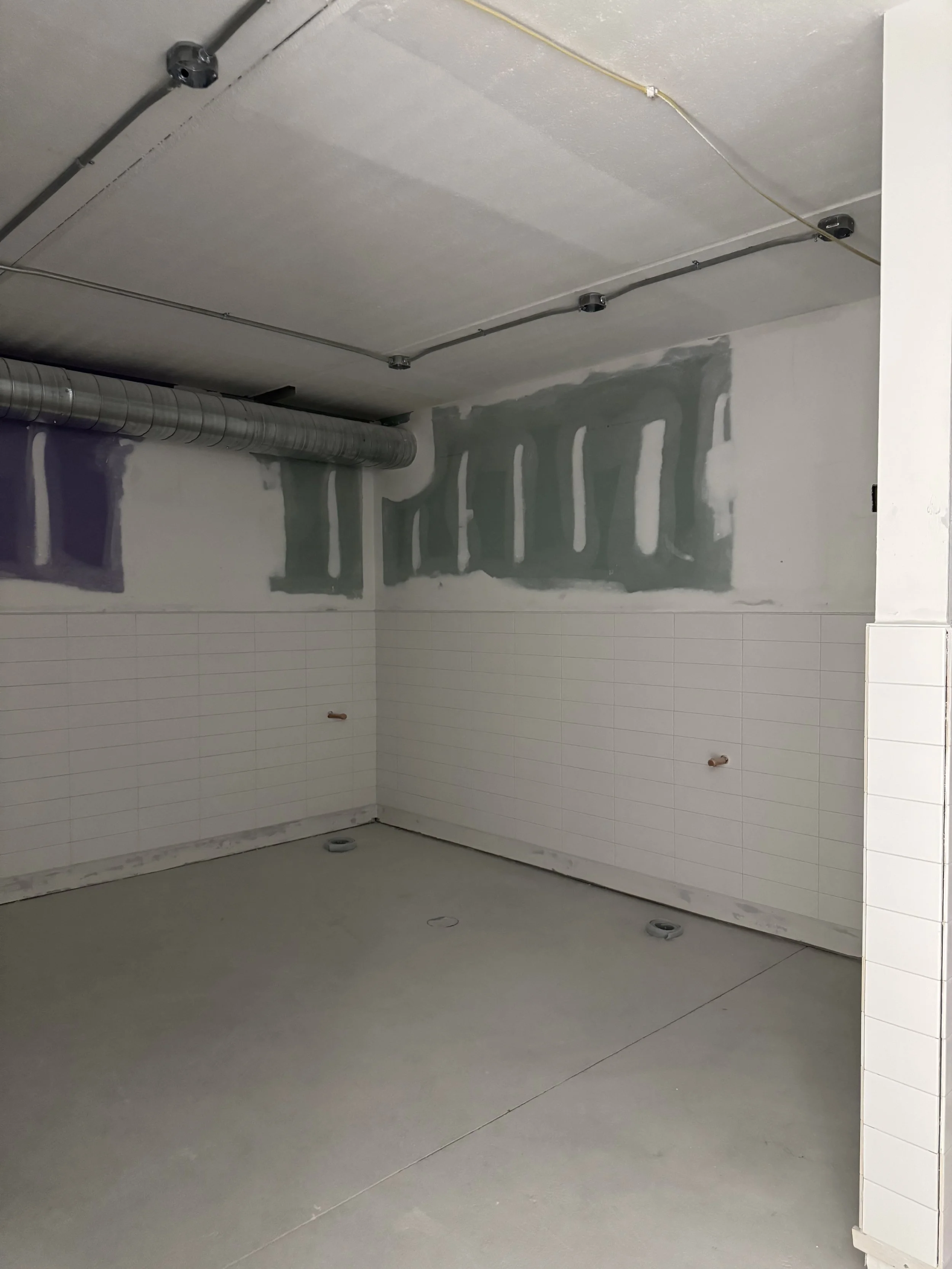
Tile
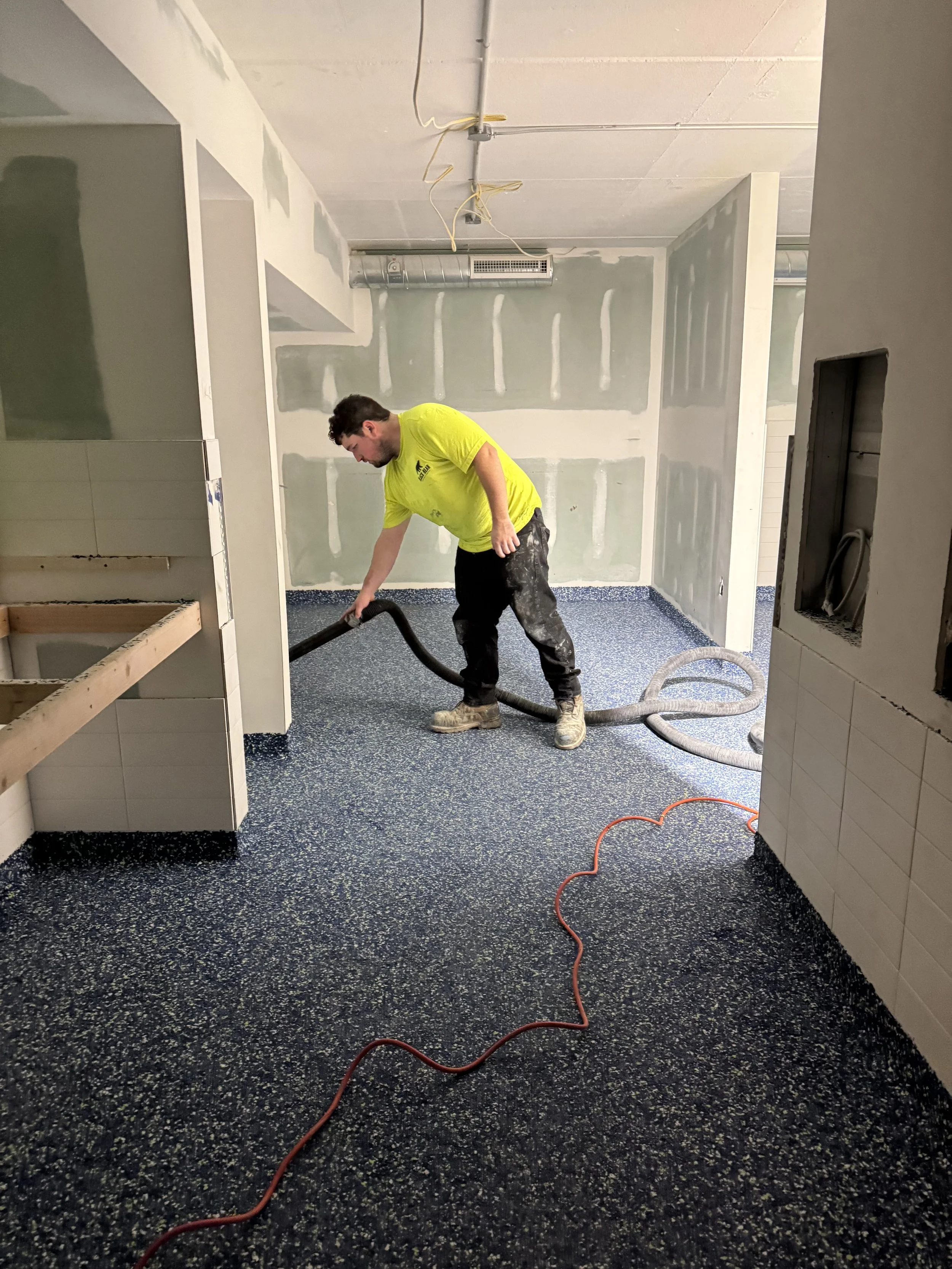
Epoxy Floor
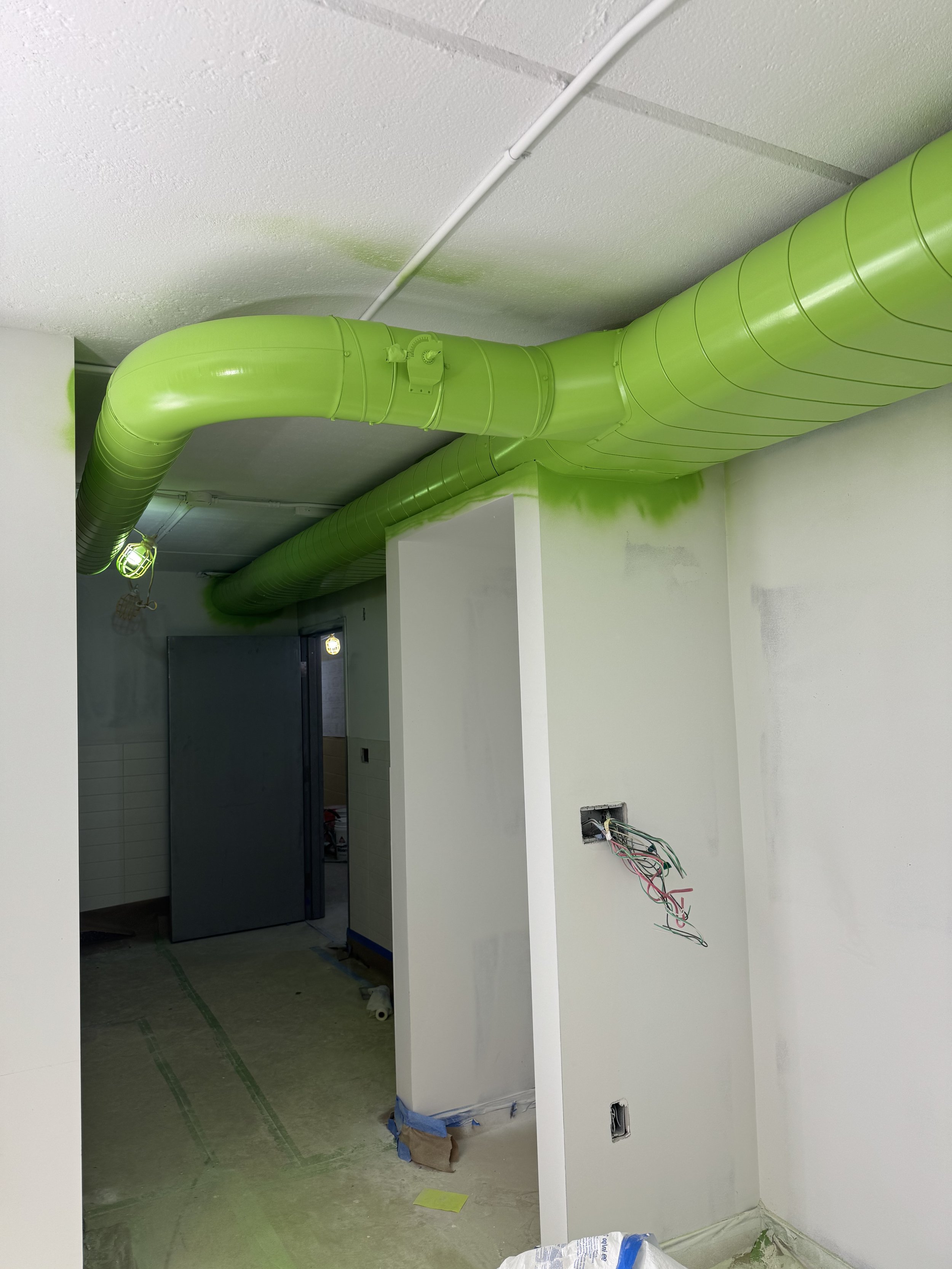
Paint
Final Product